From wicked problems to sustainable services: A conceptual framework grounded in systemic design thinking
Abstract: Current global challenges ensure that virtually no company can afford to ignore the three dimensions of sustainability—economic, social, and environmental—when developing new offerings. Customers are demanding novel, environmentally and socially responsible innovations. Design thinking and service design methods emphasise co-developing services with customers, a practice considered crucial, especially for service-oriented firms. We begin with a literature review of existing research on design thinking, service design, and learning, especially related to wicked problems and sustainable innovation. Our main goal is to create a new framework, based on these concepts, to help companies develop services that are more sustainable. To address relevant criticism, we integrate systemic design principles within the framework. We assess the applicability of the framework using illustrative business case examples and conclude with a discussion of findings. Our research provides a modest but meaningful contribution toward a deeper understanding of how to manage wicked problems and reinforce sustainable innovations by utilizing design thinking, service design, and learning approaches.
Keywords: Design thinking, service design, learning, systemic design, wicked problems, sustainability
Authors:
Mervi Rajahonka, corresponding author, South-Eastern Finland University of Applied Sciences, mervi.rajahonka@xamk.fi
Kaija Villman, Savonia University of Applied Sciences, kaija.villman@savonia.fi
1. Introduction
The service sector’s economic influence is steadily rising, unlocking new growth opportunities for businesses. At the same time, the traditional boundaries between manufacturing and services are blurring as industries undergo servitisation (Baines et al. 2009). Beyond its economic impact, servitisation is increasingly viewed as a vital strategy for global environmental sustainability (World Economic Forum 2020). Climate change has been described as a wicked problem that has the potential to end life (Lehtonen et al. 2019). At the same time, there are many other global challenges (e.g., natural catastrophes, social and health problems, conflicts) that are fundamentally altering competitive dynamics, business networks, and customer needs. The business environment is changing rapidly and becoming more complex. Organisations have entered VUCA (volatile, uncertain, complex, and ambiguous) environments, as Johansen and Euchner (2013), or an age of polycrisis, as the United Nations puts it (Niehaus & Mocan 2024). One wicked problem is challenging enough, let alone multiple wicked problems entangled with one another.
In VUCA environments, organisations need flexibility and adaptability to changes. Moreover, current global challenges ensure that virtually no company can afford to ignore the three dimensions of sustainability—economic, social, and environmental—when developing new service offerings. Because wicked problems are inherently unsolvable, organisations seeking to develop products and services to address them cannot operate in isolation. Instead, they must facilitate the development of shared understanding among customers and other stakeholders. This, in turn, requires new forms of innovation processes and novel tools that actively integrate the wider community into the process, including actors with conflicting values and objectives.
Design thinking and service design methods are commonly used methods in companies’ innovation processes. These approaches emphasise co-developing services with users, a practice considered crucial for service-oriented firms (Galvagno & Dalli 2014). Design thinking has also been mentioned as one of the approaches that increase flexibility and adaptability and help to address complex and wicked problems (Niehaus & Mocan 2024; He et al. 2026). Moreover, as design thinking combines challenging assumptions to generate new knowledge with reflection of what is already known, it can facilitate learning and therefore indirectly influence innovation via organisational learning (He et al. 2026). Thus, design thinking is a promising approach for developing services for solving wicked problems in VUCA environments. However, to remain economically sustainable, a company must ensure that co-developed ideas are also relevant to the company’s strategic goals and operational capabilities. Wicked problems are systemic in nature, which implies that any attempts for “solving” them must also be systemic and holistic, avoiding partial optimization. This perspective recognizes that innovations are not merely applications of new technologies but also embody meanings and values. (Hautamäki & Oksanen 2016.)
Based on the discussion above, this paper contributes to the literature by developing a theory-based framework to support companies in service development for addressing wicked problems, drawing on theories of sustainable innovation, learning, design thinking, and service design. Integrating these approaches constitutes a powerful combination for addressing sustainability-related wicked problems. The existing research literature combining these themes is fragmented. Theoretical or practical approaches to wicked problems have been addressed only to a limited extent and have rarely been connected to organisations’ strategies or innovation processes. Only a few frameworks exist, primarily focused on new product development (e.g., He et al. 2026) or the application of design thinking in policy contexts (e.g., Källström et al. 2025), or specific types of wicked problems or contexts (e.g., Russell-Bennett et al. 2025; Suoheimo 2019). These approaches tend to treat design thinking more as a tool rather than as a strategic approach, as conceptualized in the framework developed in this research.
The study begins with a literature review examining how design thinking, service design, and learning approaches can be applied in sustainable innovation aimed at addressing wicked problems. The central objective is to propose an integrative framework grounded in these theoretical perspectives. Specifically, this paper seeks to answer two questions: 1) How does research literature describe the application of design thinking, service design, and learning-based approaches to address wicked problems and drive sustainable innovation? 2) Which specific design and learning approaches are best suited to facilitate sustainability in service development?
After this introduction, the paper continues with a literature review on design thinking, service design, and learning in the context of wicked problems and sustainable innovation. It then introduces a conceptual framework that integrates these perspectives with systemic design principles. The applicability of the framework is illustrated through two business case examples, and the paper concludes with a discussion of key insights, implications, limitations, and avenues for future research.
2. Research design
We conducted a literature review to study if and how design thinking, service design and learning approaches have been used in the research literature on wicked problems and sustainable service innovations. As the literature about this interdisciplinary theme has not been much reviewed and the aim was to summarize the existing knowledge on the theme, the scoping review method proposed by Arksey and O’Malley (2005) was employed together with the integrative approach, which is commonly used for synthesizing scattered knowledge (Torraco 2016). Based on our literature review, we built a framework and illustrated its use with case examples in the sustainability domain retrieved from publicly available sources. Finally, we discuss our findings and provide recommendations.
In our literature searches in Google Scholar and Web of Science, we used multiple search strings, such as “design thinking” AND “sustainab*” AND “wicked problem*”; “design thinking” AND “sustainable innovation”; “design thinking” AND “wicked problems”; “service design” AND “sustainable innovation”; “service design” AND “wicked problems”; learning AND “sustainable innovation”; and learning AND “wicked problems”. We did not use any specific timeframe, but most of the papers found were written after the year 2000. The timeframe was omitted because we knew that the discussions on wicked problems and design had started early. Around two hundred papers were found, of which relevant ones – around one hundred – were selected for further inspection after reading titles and abstracts. These articles were selected for full-text review. The inclusion criteria were that the articles would be business-related (we excluded, for example, articles on education or healthcare) and ideally dealing with the intersection of concepts (e.g., application of service design in developing sustainable innovation). Studies were excluded if the discussion focused on a single search term while other concepts were only mentioned. Finally, 43 most relevant papers were analysed with content analysis to find trends, research gaps, and thematic structures (Patton 2002). Building on the snowballing technique and our prior research on wicked problems, design thinking, and learning theories, we also included 20 seminal papers that offer key theoretical contributions, even though they do not necessarily address sustainability.
For the analysis, an abductive research approach was adopted, involving iterative movement between theory and empirical findings, see Figure 1 (Kovács & Spens 2005; Spens & Kovács 2006). Abduction is also a process commonly used in design, integrating and synthesizing diverse inputs gathered from a wide range of stakeholders (He et al. 2026). Design process builds on iteration, and divergent and convergent thinking (Källström et al. 2025).
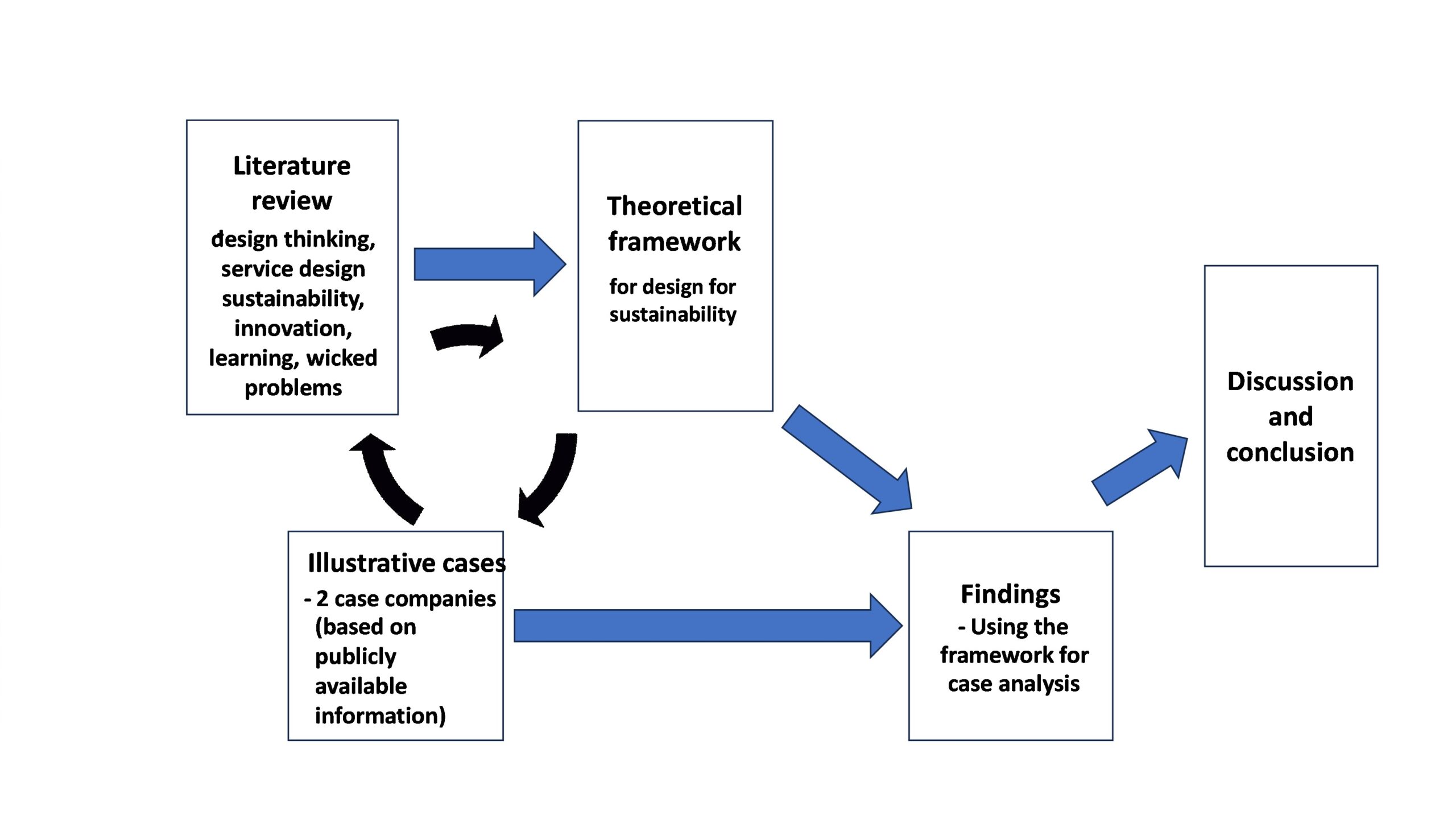
Figure 1. Research design.
Next, in order to build a research framework, we review earlier literature on wicked problems, organisational and individual learning, and design thinking.
3. Literature review
3.1 Wicked problems
Wicked problems are characterized by ill-formulated structures, confusing information, and a high number of stakeholders with conflicting values; furthermore, their systemic implications remain unclear (Churchman 1967; Nielsen et al. 2019). Based on a typology of problems, a problem is very wicked if neither the problem nor the solution is known (complexity), and if there are multiple parties and conflicting values or interests (diversity) (Head & Alford 2008; Suoheimo 2019). Every wicked problem is essentially unique. Solutions to wicked problems are not straight-forward true-or-false solutions, but good-or-bad (Rittel & Webber 1973; Brønn & Brønn 2018).
Wicked problems cannot be solved. Rather, you can help stakeholders negotiate a shared understanding and meaning of the problem and its potential solutions. (Conklin et al. 2007; Zivkovic 2018.) Rittel and Webber (1973) formulated a list that contains ten properties of wicked problems. According to them, wicked problems are unique; they do not have stopping rules or solutions that are true or false, they do not have definitive formulation or a list of acceptable operations, they have more than one possible explanation and are linked to other problems, the solver has no right to be wrong, and there is no ultimate test or room for trial and error. This complexity is particularly evident in the realm of sustainability, which Brønn and Brønn (2018) identify as a perfect manifestation of the wicked problem. According to Buchanan (1992), design problems are fundamentally wicked because they require the designer to discover the subject matter within the problem itself.
Pyykkö et al. (2021) refer to Dentoni et al. (2017) and present four alternative strategies for change in supply chains to create sustainability. The change can be either co-created, where multiple stakeholders are involved in creating a shared understanding of the problem, supported by companies introducing new operation models in their channels, done with the help of pilots, or forced by breaking the existing power structures through confrontation. Pyykkö et al. (2021) claim that these strategies have some elements in common with design thinking and its evolved double diamond model.
3.2 Organisational and individual learning
As competition intensifies, technology advances, and customer preferences evolve, it is increasingly essential for companies to operate as learning organisations. Research over recent decades highlights the importance of organisational learning (e.g., Nonaka & Takeuchi 1995; Senge 2006; Awang et al. 2019; Ricciardi et al. 2021). In such organisations, employees continuously create, acquire, and share knowledge, enabling the company to adapt to unexpected changes more effectively than its competitors (Garvin et al. 2008).
Senge (1990) identifies two types of organisational learning: adaptive and generative. While adaptive learning focuses on reacting to the current market, generative learning involves challenging internal assumptions to create new possibilities (Slater & Narver 1995; Matthing et al. 2004). Argyris (1991) argues that while business success depends on learning, most professionals misunderstand the process. Many define learning narrowly as problem-solving, focusing solely on correcting external errors—a process known as single-loop learning. However, true success requires double-loop learning: a deeper level of reflection where individuals critically examine their own thinking and behaviours to uncover the internal biases that hinder organisational progress. (Argyris 1991; Kang 2007).
Building on Argyris’s work, researchers have since introduced triple-loop learning (Bateson 2000; McClory et al. 2017). While double-loop learning focuses on changing strategies, triple-loop learning involves high-level reflexivity—the questioning of deeply held cultural values and norms (Methe 2017). Research suggests that entrepreneurs naturally lean toward these higher-loop perspectives; they are more likely than others to gather diverse information, question if current operations remain appropriate, and experiment with new solutions (Thorpe et al. 2005).
Dewey (2005) defines learning as the continuous reorganisation and reconstruction of experience. This process is often viewed through two lenses: the stages of knowledge management and the depth of individual competence. According to McClory et al. (2017), the learning process involves four key stages: creating new knowledge, preserving it, transferring it to others, and applying it. In contrast, Bloom’s Taxonomy (1956) measures the quality of that learning across six hierarchical levels—moving from basic recall and understanding to higher-order skills like application, analysis, synthesis, and critical assessment.
While learning in small and medium-sized enterprises (SMEs) is often individual rather than organisational (Keskin 2006), research identifies three distinct levels of learning: individual, group, and organisational (Ricciardi et al. 2021). To bridge these levels, Crossan et al. (1999) proposed the 4I Model, which uses four feedback processes to transform personal insights into company-wide knowledge: Intuiting: individual perception of patterns and possibilities; Interpreting: explaining these individual insights to others to build shared understanding; Integrating: developing coordinated action and common goals at the team level; Institutionalizing: embedding team learning into the organisation’s formal systems, structures, and strategies.
The organisation’s most important sources of learning are typically outside it. According to Peschl (2023), many organisations maintain a reactive learning culture that prioritises refining internal knowledge over external adaptation; however, this focus limits their ability to navigate the volatile and unpredictable nature of today’s VUCA dynamics. Research suggests a strong link between market orientation and an organisation’s learning orientation. Keskin (2006) and Nasution et al. (2011) argue that market orientation acts as a catalyst; a firm only truly becomes learning-oriented once it has first adopted a market-oriented focus. However, Yilmaz et al. (2005) distinguish their outcomes: while customer orientation drives market success and economic growth, learning orientation fosters qualitative gains, such as employee commitment, service quality, and innovation. Ultimately, sustained success in competitive environments requires both a market focus to drive growth and a learning culture to enable continuous development (McClory et al. 2017).
3.3 Design thinking
According to Brown (2008), design thinking accelerates idea generation by expanding the innovation ecosystem to include the customer. At its core is a human-centred approach that aligns solutions with actual human behaviours and needs. This is achieved through rapid experimentation; prototypes should be built as early as the first week, not to finalize a product, but to uncover strengths and weaknesses. Brown (2008) visualizes the design process as a system of spaces—Inspiration, Ideation, and Implementation—rather than a linear sequence. By moving naturally through these iterative stages, organisations can transform insights into a sustainable competitive advantage. Brown also argues that beyond formal training, design thinking is a natural tendency characterized by five key personality traits. These include empathy, which allows the thinker to inhabit multiple perspectives; integrative thinking, the ability to synthesize conflicting concepts; and optimism regarding problem-solving. Furthermore, design thinkers rely on experimentation over incrementalism and prioritise collaboration to navigate the complexity of contemporary service innovation.
Design thinking and service innovation process can be understood as a continuous and innovative learning process, requiring transformative or double-loop learning, and questioning one’s assumptions and the company’s existing practices (Argyris & Schön 1978; Bender-Salazar 2023). Learning has an essential role in the process of change towards sustainability (Melo 2014).
Despite the widespread use of service design methods in innovation, a purely mechanical application of these methods is often insufficient (Augsten & Marzavan 2017; Junginger 2016). True business success requires viewing design thinking as a form of strategic art rather than a mere pack of tools. When applied as a strategic framework—not as a standard problem-solving methodology—it enables organisations to navigate complex innovation challenges more effectively (Junginger 2016; Augsten & Marzavan 2017).
3.4 Integrative remarks based on the literature review
Issues related to sustainability are often highlighted as an example of a wicked problem. The literature reviewed frames wicked problems as complex challenges characterized by uncertainty, interdependencies, and conflicting stakeholder values. Due to their complex nature, shared sense-making among stakeholders and negotiated understandings are needed of both problems and their potential solutions. Consequently, research emphasises that addressing wicked problems requires exploratory, collaborative, and iterative approaches. Design thinking is a good option. Rather than a set of tools, design thinking can be conceptualised as a strategic approach that supports experimentation, reflexivity, and the integration of perspectives. Design thinking can also be described as a collaborative learning process. Higher-order learning, such as double-loop, triple-loop, and transformative learning, is essential in uncertain and dynamic environments where one needs to question underlying assumptions, values, and norms. Sustainability-related wicked problems provide a contextual background for our framework presented next in Section 4. Addressing such problems requires iterative sense-making, making design thinking a suitable response due to its human-centred, exploratory, and collaborative nature. Higher-order learning functions as the central enabling mechanism linking wicked problems and design thinking.
4. Development of a framework for design for sustainability
The literature establishes that wicked problems are uniquely challenging due to their ill-defined nature, conflicting stakeholder values, and unpredictable systemic consequences (Churchman 1967; Nielsen et al. 2019). This concept is particularly expressive for addressing environmental and societal crises; indeed, sustainability is often categorized as a typical wicked problem because it lacks a simple, definitive solution. (Brønn & Brønn 2018).
Design thinking and service innovation are best viewed as a continuous journey of transformative learning. This process relies on double- or triple-loop learning, where an organisation moves beyond surface-level solutions to critically question its foundational assumptions, existing practices, and even cultural values and norms (Argyris & Schön 1978; Methe 2017; Bender-Salazar 2023). As Junginger (2016) argues, success requires moving past the mechanical application of tools; design thinking must be embraced as a strategic art applied to high-level innovation challenges. By positioning design thinking as an experiential learning process—driven by empathy, testing, and iteration—organisations can more effectively navigate and solve complex wicked problems (Earle & Leyva-de la Hiz 2020).
While service design is often praised for its ability to foster collaborative innovation across disciplinary boundaries (Sun et al. 2022), its effectiveness in addressing wicked problems is not without debate. Critics suggest that service design may lack the necessary depth for such complexity, proposing systemic design as a more robust alternative (Jones 2014; Zivkovic 2018). This research acknowledges these limitations and seeks to address them by integrating systemic design principles into the proposed framework. The utility of this hybrid approach is illustrated through business cases specifically focused on the sustainability domain.
Our main goal in this paper is to create a new strategy-level framework to help companies develop services that are more sustainable. Wicked problems form a conceptual starting point for the framework. Sustainability challenges provide an example of such problems, where uncertainty, value conflicts, and long-term consequences are intertwined. Because neither the problem nor the solution is clear, wicked problems require iterative and collaborative sense-making processes. Design thinking operates in the framework as a human-centred and action-oriented sense-making mechanism, creating opportunities for negotiation and building shared understanding. Rather than trying to “solve” wicked problems, design thinking allows actors in collaboration to explore alternative interpretations and test solutions. At the core of the framework is learning, which functions as the enabling mechanism. Higher-order learning processes are needed where reflection of deeper cultural values and norms is necessary. Design thinking inherently activates these higher-order learning processes by encouraging experimentation, reflection, and the continual questioning of existing practices, together with the wide engagement of stakeholders. In the framework, design thinking can be understood as both a learning process and a learning catalyst. When applied strategically—not merely as a toolkit—it supports transformative learning required for organisational change and transitions towards sustainability.
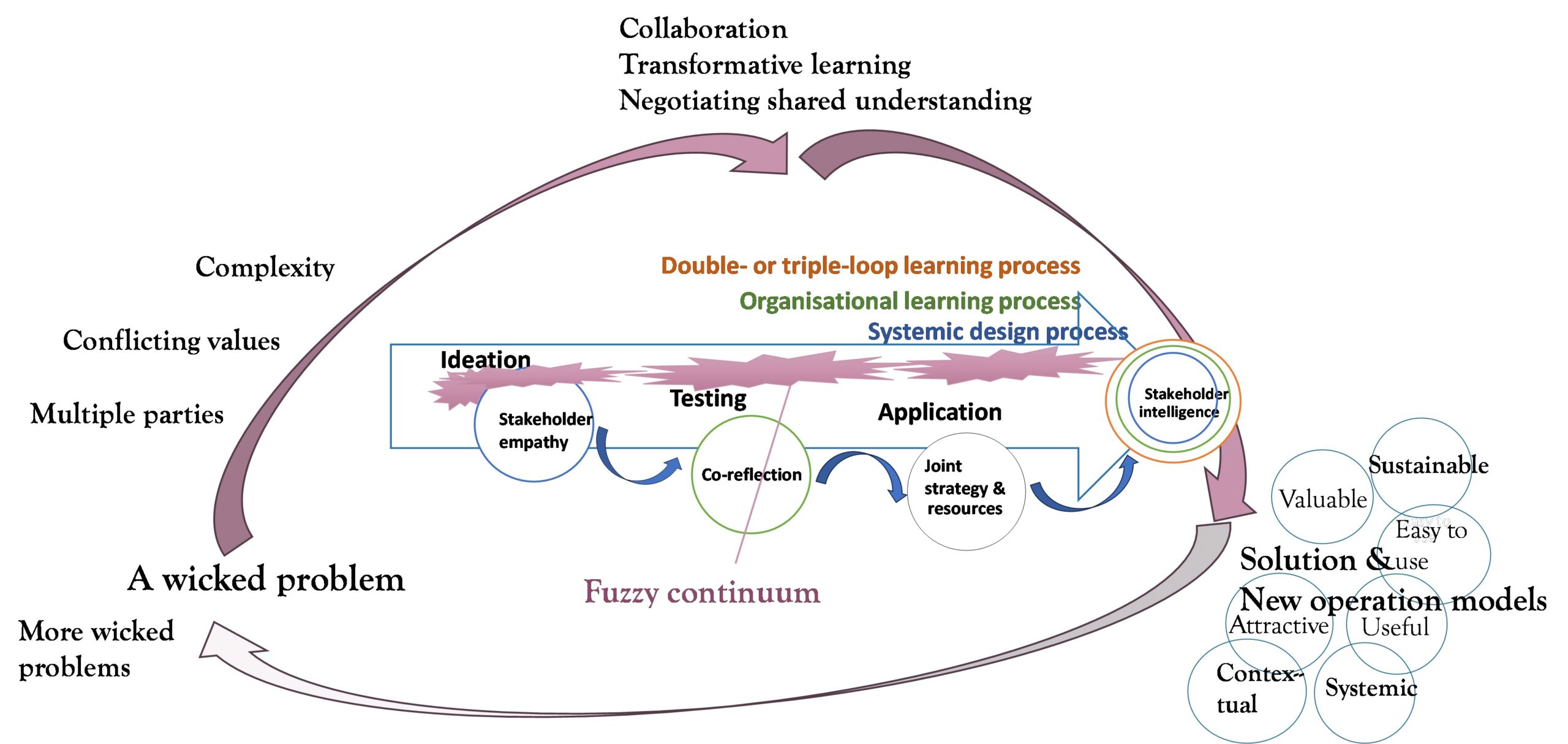
Figure 2. Framework for design for sustainability (adapted from Rajahonka & Villman 2024a).
When following design thinking ideas, beyond generating novel ideas, new solution development requires a practical phase where concepts are tested from multiple perspectives to generate actionable insights (Rajahonka & Villman 2024b). At the same time, as Sundbo (1990) argues, innovations must remain within a strategic framework to prevent uncontrolled activity. By maintaining this strategic focus and building on existing competencies (Therin 2003), companies together with their stakeholders can co-create solutions that are sustainable and feasible but also attractive, useful, and intuitive for the users.
The framework in Figure 2 illustrates that addressing wicked problems requires navigating both inherent complexity and a landscape of multiple stakeholders with conflicting values (Head & Alford 2008; Suoheimo 2019). To find viable solutions, companies must integrate learning and design approaches to solve wicked problems by facilitating collaborative, transformative learning and negotiating a shared understanding among all parties (Conklin et al. 2007; Brown 2008; Zivkovic 2018.). In this context, design thinking must be elevated to a strategic art: a systemic design process rooted in double- or triple-loop individual and organisational learning (Methe 2017). This approach requires ideation fuelled by stakeholder empathy, testing grounded in co-reflection, and application supported by joint strategies and resources (Earle & Leyva-de la Hiz 2020).
The concept of the Fuzzy Continuum suggests that, unlike simpler product or service development processes—where the fuzzy front end is mainly associated with uncertainties, ambiguities, and unknowns at the beginning of a project (Zhang et al. 2019)—iterative development processes originated by wicked problems require stakeholders to tolerate uncertainty for a much longer period. New minor or big challenges or even wicked problems can emerge unexpectedly while the process advances. Ultimately, this systemic design process fosters what we call stakeholder intelligence, yielding sustainable, systemic, and context-aware solutions that are attractive and easy to use, and provide value and utility to everyone involved (Nasution et al. 2011). Furthermore, new sustainable operation models must be adopted in the company and by each individual employee, but also across partner and stakeholder networks.
Taken together, the framework conceptualises wicked problems as the driver of complexity, design thinking as the processual response, and learning as the mechanism that enables change. Their interaction explains how organisations can navigate systemic sustainability challenges that cannot be solved through traditional analytical approaches alone. Design thinking activates these learning processes across individual, group, and organisational levels, supporting the transformation of insights into collective action and institutional change.
When considering sustainability and co-creating solutions for the accompanying wicked problems, stakeholder intelligence describes the practice of turning deep stakeholder insights into innovative and sustainable solutions. It involves an iterative cycle of testing, analysing, and learning from real-world experiences to create value. This process requires a balance between practical, hands-on business engagement and the systematic integration of various data sources. According to Peschl (2023), simply acquiring external knowledge is insufficient; an organisation must develop the internal capacity to interpret that information and apply it to its own commercial goals to guarantee the economic sustainability of the new solutions and operation models.
Sustainable innovation requires both individuals and organisations to challenge their core assumptions. Moving from experimentation to implementation demands more than just good ideas; it requires the courage to face uncertainty and the creative ability to navigate the unknown. Ultimately, the transition from idea to outcome depends on a rigorous process of testing and building a strategic understanding of how to apply those insights. Only by bridging this gap can a company deliver solutions that are not only valuable and useful for the stakeholders but also sustainable for all the stakeholders involved, including the company itself. In any case, tackling wicked problems requires innovation that engages various stakeholders in a wide system, i.e., systemic innovation.
5. Using the framework for analysing illustrative case examples
The illustrative case examples in this paper are based on publicly available information and combat the acute crisis of clean water. A recent UN report (Madani 2026) states that nearly three-quarters of the world’s population lives in countries classified as water-insecure. A water bankruptcy is now at hand, as some water reserves are known to have exhausted—or are exhausting—to such an extent that they can no longer be restored within a human lifetime. Even though the water situation is critical in certain areas, efforts must be made to resolve it. Excessive water consumption, environmental destruction, climate change, and pollution must be brought under control, states the report.
The first case company, RiverRecycle, is a Finland-based company established in 2019. Dedicated to combating plastic pollution in global waterways, the company operates across seven countries to collect and recycle river waste. Their model extends beyond simple debris removal; once their cleaning technology is deployed, they launch collaborative community programs centred on waste management education and local employment. By hiring and training local operators, the company stimulates regional economies while directly contributing to 10 of the 17 UN Sustainable Development Goals (SDGs). The company claims that transforming waste collection and recycling into viable livelihoods enables communities to lead their own river cleanup efforts. Unlike charitable models that require constant funding, this approach builds a self-sustaining engine for environmental change. The company has several institutional partners, such as The Coca-Cola Foundation and Huhtamaki. (Riverrecycle n.d.)
The second case example, Origin by Ocean, is a Finnish technology and material innovation startup that specialises in algae-based innovation, utilising a patented biorefining process to extract bio-based chemicals from harmful algal blooms and ecologically farmed seaweed. Their regenerative supply chain tackles two global challenges at once: purging oceans of excess nutrients while creating sustainable livelihoods for coastal entrepreneurs. By focusing on environmental balance, the company’s harvesting methods mitigate the damage of algal blooms and support large-scale ocean restoration. Through a collaborative business ecosystem, they empower a diverse network of local partners—including fishermen, boat operators, and offshore wind maintenance crews—turning environmental restoration into a driver of economic opportunity. Origin by Ocean is part of the Ellen MacArthur Foundation community (Origin by Ocean 2026).
The systemic sustainable innovation process is more than a set of tools; it is an ongoing learning and design process. True innovation requires double- or triple-loop learning—the ability to challenge a company’s and stakeholders’ core assumptions and traditional practices, along with cultural values and norms. When this process is treated mechanically or remains superficial, stakeholder understanding suffers, leading to unsatisfactory and ineffective outcomes. Both of the case companies emphasise their negotiation and collaboration with local partners, as well as offering the local society work and learning opportunities. These opportunities are based on the idea of a greener environment—and how local people can find ways to clean up their own living environment and support responsibility. The operation models of these startups resemble a combination of co-creation, supporting, and doing of change, as Pyykkö et al. (2021) describe Dentoni et al.’s (2017) four alternative strategies for change to create sustainability. In these strategies, multiple stakeholders are involved in creating a shared understanding of the problem, companies introducing new operation models in their channels, leaning on experimentation and piloting. These strategies illustrate systemic design thinking. Main concepts of the framework and their corresponding applications in cases are summarized in Table 1.
Table 1. Main concepts presented in the framework and their corresponding applications in cases.
| RiverRecycle | Origin by Ocean | |
|---|---|---|
| Wicked problem | Plastic pollution in waterways, shortages of waste management, and local employment | Excess nutrients in oceans, scarce livelihoods of coastal entrepreneurs |
| Phase 1: Parties / Stakeholders, Conflicting values, Complexity | Riverside communities, cities, villages, and their local residents; No motivation to invest in waste management; Poor people with multiple problems | Communities and their residents in coastal areas; Livelihoods decreased due to pollution and overfishing; Poor people with multiple problems |
| Phase 2: Collaboration, Learning, Negotiation | Collaborative community programs | Building a collaborative business ecosystem of local partners |
| Phase Systemic design process: Ideation / Sources of stakeholder empathy | Waste management education | Turning environmental restoration into a driver of economic opportunity |
| Phase Systemic design process: Testing / Co-reflection | Hiring local operators | Collaborative business ecosystem |
| Phase Systemic design process: Application / Joint strategy & resources | Local operators, helping regional economies build waste management systems | Local partners—fishermen, boat operators, and offshore wind maintenance crews |
| Phase Systemic design process: Stakeholder intelligence | People need knowledge, tools, and resources. Local communities do not have waste management systems; they need help to establish them. | People do not have a livelihood. They need knowledge, tools, and resources. |
| Solution | Debris removal technology for collecting and recycling river waste. Offering waste management education and local employment. | A patented biorefining process to extract bio-based chemicals for cosmetics and textile industries, etc. Harvest of harmful algal blooms and ocean restoration by farming seaweed. |
6. Discussion and conclusion
Developing new service solutions helps companies grow. To do this effectively, companies must meet customer demand for sustainable service innovations. In this research, existing research on design thinking, service design, and learning was reviewed, especially related to wicked problems and sustainable innovation. The main goal was to create a new framework, based on these concepts, to help companies develop services that are more sustainable. To address relevant criticism, systemic design principles were integrated within the framework. The framework’s utility was then assessed using illustrative business cases. The research provides a modest but meaningful contribution toward a deeper understanding of how to manage wicked problems and reinforce sustainable innovations by utilizing design thinking, service design, and learning approaches.
6.1 Theoretical implications
To answer the first research question, it can be concluded that this research highlights a growing yet emergent body of literature that integrates design thinking, service design, and learning-based approaches to address wicked problems in sustainable innovation. Current understanding of design theory positions the discipline as a bridge between individual learning and systemic change. Earle and Leyva-de la Hiz (2020) define design thinking as a specialised form of experiential learning, where iterative cycles of empathy, testing, and redesign provide a structured approach to solving wicked problems. This internal process is complemented by the collaborative nature of service design; as Sun et al. (2022) note, these challenges require innovation that engages a diverse range of stakeholders within the broader system. Suoheimo (2019) argues that contemporary design has expanded its scope—moving beyond traditional information, product, and service design—to address and tame the complexity of wicked problems. While Pyykkö et al. (2021) argue that systems thinking is a cornerstone of service design, as its core theories align naturally with the complexities of wicked problems.
However, the literature integrating these approaches remains limited. Only a few frameworks exist, primarily focused on new product development (e.g., He et al., 2026) or the application of design thinking in policy contexts (e.g., Källström et al., 2025), or specific types of wicked problems or services (e.g., Russell-Bennett et al. 2025; Suoheimo 2019). These approaches tend to treat design thinking more as a tool rather than as a strategic approach, as conceptualized in the framework developed in this research. The ecosystem model proposed by Pyykkö et al. (2021) represents the closest reference; however, it is not articulated as a coherent framework.
In addressing the second research question regarding which design and learning approaches best facilitate sustainable service development, this study argues that sustainability necessitates a specialised integration of organisational learning, systemic problem-solving, and service design. Bender-Salazar (2023) posits that rapid learning and the iterative reflection inherent in design thinking are essential for navigating wicked problems. While Baldassarre et al. (2024) affirm that design thinking provides a collaborative foundation for addressing sustainable development, the discipline is currently undergoing a strategic shift. As Zivkovic (2018) notes, there is a growing consensus that standard service design may be insufficient for high-level complexity; consequently, systemic design is emerging as the more appropriate approach for tackling the deepest wicked problems (Jones 2014).
This research indicates that systemic design, service design, and collaborative learning can significantly reinforce sustainable innovation. Since wicked problems are by nature unsolvable, organisations must instead facilitate a shared understanding among stakeholders. This requires an innovation process that actively integrates the wider community—even those with conflicting values and objectives. The more challenging and complex the problem, the more systemic change is needed and a broader understanding of individual and organisational learning. This, in turn, requires dialogue and collaborative learning.
6.2 Managerial implications
This research shows that developing innovative and sustainable service solutions requires the innovator to learn and question one’s assumptions and the company’s existing practices, but also to involve a wider range of stakeholders in the innovation process. Using service design methods thoroughly and appropriately does not always lead to learning or assure good outcomes, because without learning, service design can remain only at the level of methods and tools. There are several fuzzy points related to the service design process where iteration and leaps of learning are needed to guarantee good results. To be successful, an innovator needs stakeholder empathy received in the ideation phase of the service design process, transformative learning gained through testing new solutions with users, as well as application of the learnings into the realisation of new solutions while considering the company’s and its stakeholders’ values, strategies, and resources. These ensure reaching an adequate level of stakeholder understanding and delivering valuable and socially and environmentally sustainable services, but at the same time, the feasibility and economic sustainability of the solutions and their back-office processes for the company. However, the process of learning and testing requires an innovator to possess problem-solving skills, courage, and—above all—an acceptance of long-term uncertainty.
A service innovation and development process for sustainable services is a continuous and innovative learning and design process: it requires continuous learning and development of competencies. Novel digital, green, and socially responsible innovations require learning and innovations at all levels. To address systemic challenges, development must be multifaceted. It relies on sustainable product and service innovations, but also on transforming the everyday practices in the companies. The implementation of new practices depends on the employees, and this is most effectively done through learning by doing. However, learning at an individual employee level is not enough; organisational learning at a company level is required. Nonetheless, sufficient stakeholder insights at the whole company level are apparently rather challenging to reach. Organisational learning is not enough either, but learning and changes in everyday practices between stakeholders and organisations—i.e., inter-organisational learning—are also needed.
Our main goal was to create a new framework, based on the concepts of design thinking, service design, learning, wicked problems, and sustainable innovation, to help companies develop services that are more sustainable. Together, the framework conceptualises wicked problems as the driver of complexity, design thinking as the process through which that complexity is engaged, and learning as the mechanism that enables reflection, adaptation, and sustainable organisational change. The framework developed in this research acknowledges the systemic nature of design processes, aiming at tackling wicked problems with innovating new products and services that are environmentally, socially, and economically sustainable. This kind of innovation requires a systemic design process that engages various stakeholders in the system and a joint collaborative and transformative learning process.
The illustrative examples in this paper demonstrate that several startups are already adopting this model by deeply involving local communities and also other stakeholders in their innovation cycles. By leveraging design thinking, these organisations can accelerate sustainability transitions; stakeholder engagement not only improves the quality of solutions but also fosters the broad acceptance necessary for implementation. The framework indicates that tackling wicked problems through systemic change requires involvement across all organizational levels and stakeholders—strategic, tactical, and operational. Nevertheless, this path remains challenging, as addressing wicked problems demands fundamental shifts in the structures, cultures, and practices of companies and social systems (Pyykkö et al. 2021).
A service innovation and development process for sustainable services is a continuous and innovative learning and design process. Learning at an individual employee level is not enough; organisational and inter-organisational learning is also required. To be successful, an innovator needs customer, stakeholder, and community-wide empathy received in the ideation phase of the service design process, transformative learnings gained through testing new solutions with stakeholders, as well as application of the learnings while considering the company’s and stakeholders’ strategy and resources. As a recommendation, we can propose that companies should try to create an open, inclusive, and trust-building organisational culture based on dialogue, as this kind of culture creates an environment promoting all employees’ learning through rapid experiments with customers and business partners and accelerating organisational and inter-organisational learning (Rajahonka & Villman 2024b). This kind of culture is also beneficial to society, as a community consisting of people and companies capable of transformative learning and sustainable innovation constitutes a resilient business environment and society.
Summarising the above discussion, we would also like to provide a few guidelines for practitioners that they can utilize when aiming at solving sustainability-related wicked problems: 1) remember that wicked problems require exploration, not problem-solving, 2) progress through iteration, linear planning is not appropriate, 3) actively challenge your assumptions, 4) support collective learning, enable learning across all levels: individual, group, organisational, and interorganisational, 5) move quickly from ideation towards testing and implementation, 6) align across all levels: strategic, tactical and operational, keeping the personnel and stakeholders involved, taking care that strategies are concretised into practical action plans, 7) use feedback loops to consider what works and what does not, and 8) aim to systemic change.
6.3 Limitations and future research
All research has limitations, and this study is no exception. Our study is conceptual, grounded in a literature review, and the framework developed was evaluated through illustrative case examples, not empirically. Although our framework aims to support practitioners, its applicability is not tested in real organisational contexts. Therefore, the limitations include a shortage of empirical validation and generalisation to wider contexts. The study integrates multiple but selected research domains—sustainability, wicked problems, design thinking, service design, learning—but some relevant theories may have been excluded. Selection and interpretation of literature and construction of the framework rely on subjective choices of the researchers.
In the future, as the world becomes more complex with accelerating changes, growing global challenges, and the emergence of new technologies, we need more research on learning and sustainable innovation, and if and how these can be enhanced with the help of systemic design thinking and service design. Relatively little research exists on this topic. While these areas have been studied separately, their integration has received limited attention. The framework was developed based on theories, and empirical research is needed, particularly within SMEs, as innovations often begin with small-scale experiments. To achieve systemic change, this intersection—sustainability, learning, and design—requires more investigation.
Considering wicked problems, service design and design thinking need updating. This research highlights the urgent need for further theory-based models and empirical studies focused on sustainable service development. As global trends like climate change and artificial intelligence accelerate the complexity of the business landscape, understanding shifting customer and stakeholder preferences will become increasingly vital for companies. Fortunately, stakeholder intelligence is not an entirely distinctive characteristic; it is primarily a practice-oriented capability that can be learned and refined through active engagement.
Additionally, future studies should apply more systematic literature review approaches to strengthen theoretical integration and relationships between the key constructs and to explore alternative theoretical models. To improve practical relevance, research should involve real-world implementations of systemic design thinking with practitioners and examine contextual factors and barriers to adoption. Collaborative research designs are needed to elaborate on the frameworks developed and adapt them to different contexts, taking into account the highly context-dependent nature of sustainability-related wicked problems.
Furthermore, in the end, we should slowly try to shift our understanding of stakeholders away from a strictly anthropocentric paradigm toward a biospheric one (Pyykkö et al. 2021). By expanding systemic design to include non-human stakeholders—such as nature, animals, and plants—we face the difficult but essential challenge of representing them within innovation and learning processes.
Acknowledgements
We acknowledge inspiration from the Green CCircle project (01/24-12/26), which receives funding from the European Union’s Erasmus+ programme. An earlier version of this paper was presented at the 34th RESER Conference and the TiP 2026 Conference.
The authors used the AI tool Gemini 3 for language editing/proofreading and Copilot for language editing, summarising, and condensing the text. They reviewed and modified the content produced and assume full responsibility for the accuracy of the work. Prompts used: “Please modify the following text for clarity and flow:”, and “Please summarize/condense the following text:”
References
Argyris, C. (1991). Teaching smart people how to learn. Harvard Business Review, 4(2), 1-15.
Argyris, C. & Schön, D. A. (1978). Organisational learning: A theory of action perspective. Addison-Wesley.
Arksey, H. & O’Malley, L. (2005). Scoping studies: towards a methodological framework. International Journal of Social Research Methodology, 8(1), 19–32.
Augsten, A. & Marzavan, D. (2017). Achieving sustainable innovation for organisations through the practice of Design Thinking: A case study in the German automotive industry. Paper presented at The XXVIII ISPIM Innovation Conference – Composing the Innovation Symphony, Austria, Vienna, 18-21 June.
Awang, A. H., Sapie, N. M., Hussain, M. Y., Ishak, S. & Yusof, R. M. (2019). Nurturing innovative employees: effects of organisational learning and work environment. Economic Research-Ekonomska Istraživanja, 32(1), 1152-1168.
Baines, T., Lightfoot, H., Benedettini, O. & Kay, J. (2009). The servitization of manufacturing: A review of the literature and reflection on future challenges. Journal of Technology Management, 20(5), 547‐567.
Baldassarre, B., Calabretta, G., Karpen, I. O., Bocken, N. & Hultink, E. J. (2024). Responsible design thinking for sustainable development: Critical literature review, new conceptual framework, and research agenda. Journal of Business Ethics, 195, 25–46.
Bateson, G. (2000). Steps to an ecology of mind. University of Chicago Press.
Bender-Salazar, R. (2023). Design thinking as an effective method for problem‑setting and needfinding for entrepreneurial teams addressing wicked problems. Journal of Innovation and Entrepreneurship, 12(24), 1-23.
Bloom, B. S. (Ed.). (1956). Taxonomy of educational objectives. Vol. 1: Cognitive domain. McKay.
Brown, T. (2008). Design thinking. Harvard Business Review, June, 1-9.
Brønn, C. & Brønn, P. S. (2018). Sustainability: A wicked problem needing new perspectives. In By H. Borland, A. Lindgreen, F. Maon, V. Ambrosini, B. P. Florencio, & J. Vanhamme (Eds.), Business strategies for sustainability, 1-18. Routledge.
Buchanan, R. (1992). Wicked problems in design thinking. Design Issues, 8(2), 5–21.
Churchman, C. W. (1967). Wicked problems. Management Science, 14, B141-B146.
Conklin, J., Basadur, M. & VanPatter, G. K. (2007). Rethinking wicked problems: unpacking paradigms, bridging universes, NextD Journal, 10(1), 1-29.
Crossan, M. M., Lane, H. W. & White, R. E. (1999). An organisational learning framework: From intuition to institution. Academy of Management Review, 24, 522–537.
Dentoni, D., Waddell, S. & Waddock, S. (2017). Pathways of transformation in global food and agricultural systems: Implications from a large systems change theory perspective. Current Opinion in Environmental Sustainability, 29, 8–13.
Dewey, J. (2005). The Copernican revolution. 1929. In D. Capps & J. M. Capps (Eds.), James and Dewey on belief and experience. University of Illinois Press, Champaign, IL, 196–214.
Earle, A. & Leyva-de la Hiz, D. (2020). The wicked problem of teaching about wicked problems: Design thinking and emerging technologies in sustainability education, Management Learning, 1-23.
Galvagno, M. & Dalli, D. (2014). Theory of value co-creation: a systematic literature review. Managing Service Quality, 24(6), 643-683.
Garvin, D. A., Edmondson, A. C. & Gino, F. (2008). Is yours a learning organisation? Harvard Business Review, March.
Hautamäki, A., & Oksanen, K. (2016). Sustainable innovation: Solving wicked problems through innovation. In A-L. Mention & M. Torkkeli (Eds.), Open innovation: A multifaceted perspective, pp. 87-110. World Scientific.
He, K., Wang, T. & Zhao, X. (2026). Balancing speed-novelty innovation paradox in new ventures: The role of design thinking and ambidextrous learning. Journal of Engineering and Technology Management, 80, 101958.
Head, B. & Alford, J. (2008). Wicked problems: Implications for policy and management. Presentation delivered to the Australasian Political Studies Association Conference.
Johansen, B. & Euchner, J. (2013). Navigating the VUCA World. Research-Technology Management, 56, 10–15.
Jones, P. H. (2014). Systemic design principles for complex social systems, In G. Metcalf (Ed.), Social systems and design, Vol. 1, Translational systems science series, pp. 91-128, Springer.
Junginger, S. (2016). Thoughts on design as a strategic art. In S. Junginger & J. Faust (Eds.) Designing business and management, pp. 37-49, Bloomsbury Academic.
Kang, D. J. (2007). Rhizoactivity: Toward a Postmodern Theory of Lifelong Learning.
Keskin, H. (2006). Market orientation, learning orientation, and innovation capabilities in SMEs. An extended model. European Journal of Innovation Management, 9(4), 396-417.
Kovács, G. & Spens, K. M. (2005). Abductive reasoning in logistics research. International Journal of Physical Distribution & Logistics Management, 35(2), 132–144.
Källström, L., Laustsen, C. E., Westergren, A. & Haak, M. (2025). Using design thinking in policy practice to revitalize collaboration and solve wicked problems, Policy Design and Practice, 8(4), 408-426.
Lehtonen, A., Salonen, A. O. & Cantell, H. (2019). Climate change education: A new approach for a world of wicked problems. In J. W. Cook (Ed.), Sustainability, human well-being, and the future of education, pp. 339-374, Springer.
Madani K. (2026). Global water bankruptcy: Living beyond our hydrological means in the post-crisis era. United Nations University Institute for Water, Environment and Health (UNU-INWEH).
Matthing, J., Sanden, B. & Edvardsson, B. (2004). New service development: Learning from and with customers. International Journal of Service Industry Management, 15(5), 479-498.
McClory, S., Read, M. & Labib, A. (2017). Conceptualising the lessons-learned process in project management: Towards a triple-loop learning framework. International Journal of Project Management, 35(7), 1322-1335.
Melo, M. A. C. (2014). Sustainable innovation and the dimensions of complexity. In N. J. Delener, L. Fuxman, F. V. Lu & R. Rodrigues (Eds.) Managing in an interconnected world: Pioneering business and technology excellence. Global Business and Technology Association, Sixteenth Annual International Conference, Baku, Azerbaijan, 8–12 July.
Methe, D. T. (2017). An exploration of the conceptual linkages among entrepreneurial leadership, intellectual capital, effectuation and triple loop learning in Japanese high technology start-ups. Kindai Management Review, 5, 119-136.
Nasution, H. N., Mavondo, F. T., Matanda, M. J. & Ndubisi, N. O. (2011). Entrepreneurship: Its relationship with market orientation and learning orientation and as antecedents to innovation and customer value. Industrial Marketing Management, 40, 336–345.
Niehaus, M. & Mocan, M. (2024). Cultivating design thinking for sustainable business transformation in a VUCA World: Insights from a German case study. Sustainability, 16, 2447.
Nielsen, B. F., Baer, D., Gohari, S. & Junker, E. (2019). The potential of design thinking for tackling the “Wicked Problems” of the Smart City. Proceedings of the 24th International Conference on Urban Planning, Regional Development and Information Society. CORP–Competence Center of Urban and Regional Planning.
Nonaka, I. & Takeuchi, H. (1995). The knowledge-creating company. Oxford University Press.
Origin by Ocean (2026). Our approach. https://www.originbyocean.com/our-approach.
Patton, M. Q. (2002). Qualitative research & evaluation methods, 3rd edition. Sage Publications, Inc.
Peschl, M. F. (2023). Learning from the future as a novel paradigm for integrating organizational learning and innovation. The Learning Organization, 30(1), 6-22.
Pyykkö, H., Suoheimo, M. & Walter, S. (2021). Approaching sustainability transition in supply chains as a wicked problem: Systematic literature review in light of the evolved double diamond design process model. Processes, 9, 2135.
Rajahonka, M. & Villman, K. (2024a). Service design and learning in the context of sustainable innovations. Paper presented in Co-creating sustainable solutions for Future-proof Societies, The European Association for REsearch on SERvices (RESER), 34th International RESER Conference, 31 Oct – 1 Nov.
Rajahonka, M. & Villman, K. (2024b). Innovation and Learning as the Basis of Successful Service Business. In I. Bitran, S. Conn, A. Mitsis, A. Ritala, M. Torkkeli & M. Trabelsi (Eds.) Proceedings of The XXXV ISPIM Innovation Conference, Tallinn, Estonia, 9-12 June.
Ricciardi, F., Cantino, V. & Rossignoli, C. (2021). Organisational learning for the common good: An emerging model. Knowledge Management Research & Practice, 19(3), 277-290.
Rittel, H. W. J. & Webber, M. M. (1973). Dilemmas in a general theory of planning. Policy Sciences, 4(2), 155–169.
RiverRecycle (n.d.) Clean rivers. Recycle plastics. Protect oceans. https://www.riverrecycle.com/.
Russell-Bennett, R., Gasparin, I., Gnusowski, M., Vredenburg, J., Ahmed, J. & Ercan, S. (2025). Designing transformative service initiatives (TSIs) in polarised contexts: A framework for effective practice. Journal of Services Marketing, 39(10), 180–194.
Senge, P. (1990). The leader’s new work: Building learning organisations. Sloan Management Review, 32(1), 7-24.
Senge, P. (2006). The fifth discipline: The art & practice of the learning organisation. Random House.
Slater, S. F. & Narver, J. C. (1995). Market orientation and the learning organisation. Journal of Marketing, 59(3), 63–74.
Spens, K. M. & Kovács, G. (2006). A content analysis of research approaches in logistics research. International Journal of Physical Distribution & Logistics Management, 36(5), 374-390.
Suoheimo, M. (2019). Strategies and visual tools to resolve wicked problems. The International Journal of Design Management and Professional Practice, 13(2), 25-41.
Sun, Q., Jenkins, P. & Liu, Z. (2022). Service design practice and its future relevance. 23rd DMI: Academic Design Management Conference, Toronto, Canada, 3-4 August.
Sundbo, J. (1997). Management of innovation in services. The Service Industries Journal, 17(3), 432-455.
Therin, F. (2003). Organisational learning and innovation in high-tech small firms. Proceedings of the 36th Hawaii International Conference on System Sciences.
Thorpe, R., Holt, R., Macpherson, A. & Pittaway, L. (2005). Using knowledge within small and medium-sized firms: A systematic review of the evidence. International Journal of Management Reviews, 7(4), 257-281.
Torraco, R. J. (2016). Writing integrative literature reviews: Using the past and present to explore the future. Human Resource Development Review, 15(4), 404–428.
World Economic Forum (2020). What is servitization, and how can it help save the planet? https://www.weforum.org/stories/2020/11/what-is-servitization-and-how-can-it-help-save-the-planet/.
Yilmaz, C., Alpkan, L. & Ergun, E. (2005). Cultural determinants of customer- and learning-oriented value systems and their joint effects on firm performance. Journal of Business Research, 58, 1340–1352.
Zhang, Q., Cao, M. & Doll, W. (2019). Fuzzy front end of innovation: a dual theoretical rationale. Journal of Business & Industrial Marketing, 34(1), 176–191.
Zivkovic, S. (2018). Systemic innovation labs: a lab for wicked problems. Social Enterprise Journal, 14(3), 348-366.