Algorithmic management in the context of organizational leadership and expert work: A Delphi study
Abstract: This paper examines how algorithmic management may reshape leadership in expert organizations by 2035. While prior research has focused mainly on platform work and routine labor, we address the context of expert work through a three-round Delphi study with Finnish expert workers (n~30 depending on the round of Delphi). Our findings suggest that algorithmic management is unlikely to fully replace human leadership in expert organizations within the next decade. Instead, experts envision three coexisting futures: an adverse pathway marked by opaque decision-making, blurred accountability, and excessive delegation to AI; a deliberative pathway in which algorithms augment strategic work while humans retain formal authority; and a techno-optimistic pathway where AI assumes a broader role in defined leadership tasks. Across all scenarios, accountability, legal responsibility, regulation, and the human dimensions of judgment remain central. The study extends algorithmic management research by showing that leadership in expert organizations is negotiated and context-dependent, whereby algorithmic authority is actively shaped rather than technologically determined.
Keywords: Algorithmic management, Delphi, expert work, organizational leadership
Authors:
Aarni Tuomi, corresponding author, Haaga-Helia University of Applied Sciences, Ratapihantie 13, 00520 Helsinki, aarni.tuomi@haaga-helia.fi
Johanna Vuori, Haaga-Helia University of Applied Sciences, Ratapihantie 13, 00520 Helsinki, johanna.vuori@haaga-helia.fi
1. Introduction
Algorithmic management is transforming how organizations distribute power, responsibility, and decision-making (Eurofound 2026). The core argument algorithmic management literature makes is that algorithms increasingly participate in people management processes in ways that challenge traditional conceptualizations of management, leadership, control, and agency in organizations. This calls for proactive rethinking of what management and leadership should look like in the future, e.g., what kinds of tasks and in which contexts should be handled by human managers, and what is the role of algorithmic management systems.
The topic is particularly timely as different kinds of organizations are adapting to new ways of working after the COVID-19 pandemic by exploring different variations of remote, hybrid, and in-person work configurations. This is because previous studies have highlighted the applicability of algorithmic management particularly in contexts where a large, distributed workforce needs to be managed remotely, e.g., ride hailing, delivery courier work, online freelancing, or telemarketing (Wood et al. 2019). Rooted in a Taylorist logic, the argument is that algorithmic management tools allow the remote control of work processes in a similar fashion as supervisors oversaw work conducted on factory shop floors in person (Stark & Vanden Broeck 2024).
Stemming from this, prior research on algorithmic management highlights its dual nature: while algorithms and related digital tools for managing and supporting work processes may enhance e.g. consistency and efficiency in decision-making, they simultaneously introduce new tensions related to e.g. transparency of the digital system, power asymmetry, accountability, compliance and managerial discretion (Kellogg et al. 2020; Haefner et al. 2021; Tarafdar et al. 2023). This may lead to different types of bottom-up resistance towards the digital system, e.g., what Dietvorst et al. (2015) refer to as ‘algorithmic aversion’ and Kellogg et al. (2020) call ‘algoactivisim’. For instance, looking at the use of algorithmic management systems in the context of on-demand food delivery platforms, Tuomi et al. (2024) highlight how couriers may use different tactics to ‘game’ the digital system and then share the uncovered ‘tips and tricks’ with others on social media platforms in order to ‘regain’ control over their own work.
While there has been extensive work on algorithmic management in the contexts of digital labor platforms, digital piecework (e.g., completing microtasks on Amazon MTurk), as well as logistics, warehouse work and distributed sales and customer support, e.g., telesales and outsourced customer service (e.g., Möhlman et al. 2021; Rosenblat & Stark 2016; Tuomi et al. 2024), there is a lack of studies focusing on algorithmic management in the context of organizational leadership and expert work. This presents a gap in current understanding, whereby previous studies have only started to uncover the interplay between algorithmic management and situated knowledge, a central concept in professional, knowledge-based work. Kim et al. (2025) illustrate this by arguing that algorithmic technologies in professional knowledge work may create new knowledge, but also introduce new ‘boundaries’ and ‘translation challenges’ between human experts’ situated knowledge and algorithmic management systems’ methodical, systematic, and procedural knowledge. Against this backdrop, the present study focuses on the potential impacts of algorithmic management on organizational leadership in the context of Finnish expert organizations, exploring implications for top management and aiming to answer the following research question (RQ):
RQ: How will algorithmic management impact organizational leadership of expert organizations in 2035?
In this study, expert organizations are understood as knowledge-intensive organizations in which value creation depends primarily on the sophisticated intellectual skills and professional expertise of employees, rather than on physical assets or standardized routines. As put by Ropo and Parviainen (2001), these types of organizations employ people with specific professional expertise, work is characterised by labour intensity, and the focus is often on complex problem solving tackled by organizational hierarchies, teams, networks, and individual effort simultaneously. This aligns with von Nordenflycht’s (2010) characterization of professional service firms – a common type of expert organizations – as organizations marked by knowledge intensity, relatively low capital intensity, and, often, a professionalized workforce.
To address the identified gap in current knowledge, we applied a three-round Delphi approach to explore the ten-year development horizon (until 2035) of algorithmic management in the context of organizational leadership and expert work in Finland. The Delphi method is well-suited for qualitatively studying phenomena that are complex, evolving, and normatively contested, as it supports the systematic comparison and conceptual clarification of diverse views through iterative feedback (Linturi 2020). In futures research, the method is firmly established for identifying collective expert perceptions of underlying change mechanisms and possible future trajectories (Eerola & Miles 2011).
Findings highlight three distinct but co-existing futures – adverse, deliberative, and techno-optimistic development pathways. Shared among all of these is a human-centred perspective which challenges technological determinism and suggests that the development of algorithmic management in expert organizations is expected to remain negotiated and context-specific rather than technologically inevitable. Compared with platform-based contexts, expert work seems to place stronger constraints on how far strategic authority can, and should, be delegated to algorithmic management systems. At the same time, the increasing acceptance of generative AI in particular as a strategic support actor suggests that top management roles will continue to change. For research on algorithmic management, this highlights the need to treat expert work as a distinct context and to examine leadership not only as an object of algorithmic control but rather as a stage on which the boundaries of algorithmic authority are shaped.
The rest of the paper is structured in five sections. First, we briefly review existing literature on algorithmic management in general and in the specific context of organizational leadership. Second, we introduce our empirical approach, i.e., the three-round Delphi study, describing how and why we have applied the method. Third, we present the key findings from the three stages of the Delphi panel stage by stage, and fourth, we explain the contribution of the present work by discussing the implications of our findings in terms of practical takeaways and theoretical implications to previous knowledge. Finally, fifth, we conclude by summing up the entire paper as well as discussing the limitations of our work and the various avenues for future research that stem from these.
2. Algorithmic management and organizational leadership in expert organizations
As a field of research, the topic of algorithmic management – also referred to in several studies as algorithmic control – has, in the last 10 years, started to take shape in management, business, and information systems literature. Algorithmic control refers to the “managerial use of intelligent algorithms and advanced digital technology as a means to align worker behaviors with organizational objectives” (Wiener et al. 2021). Building on Edwards’ (1979) view of organizational control as a contested terrain structured around direction, evaluation, and discipline, in their seminal paper, Kellogg et al. (2020) conceptualize algorithmic control through six mechanisms: direction through algorithmic restricting and algorithmic recommending; evaluation through algorithmic recording and algorithmic rating; and disciplining through algorithmic replacing or algorithmic rewarding.
More recent research on algorithmic management identifies an additional control mechanism, algorithmic sanctioning, including practices such as temporarily restricting workers’ access to digital platforms in cases of noncompliance or inappropriate conduct (Lippert 2023). Beyond rational and direct forms of control, studies have also found that algorithmic control may also operate as a type of indirect or normative control (Vallas & Schor 2020; Jianu et al. 2025), whereby workers appear to act voluntarily in accordance with platform goals. This is achieved, e.g., through gamification elements, rating and ranking systems, algorithmic nudging via push notifications or default settings, and the general framing of work as entrepreneurial freedom (Work et al. 2022).
As the focus of the present study is on organizational leadership, it should be noted that the difference between leadership and management is widely contested. The seminal distinction by Kotter (1990) accentuates that management refers to planning, budgeting, organizing, and controlling, while leadership is about change. Critics, however, argue that the terms overlap (Mintzberg 2004; Yukl 2013) and claim that, in practice, all managers lead and all leaders manage. However, literature on algorithmic controldistinguishes between the two terms and mostly focuses on the management aspect. For example, the measurement for algorithmic management developed by Parent-Rocheleau et al. (2024) focuses on five functions of algorithmic management: algorithmic monitoring, algorithmic goal setting, algorithmic scheduling, algorithmic performance rating, and algorithmic compensation, without touching on algorithmic leadership.
Quaquebeke and Gerpott (2023) build on this and suggest that algorithmic systems might also be able to substitute for humans in people leadership functions, such as motivating and supporting advancement toward common goals. Combining elements of both algorithmic management and leadership, Chang et al. (2025) recently developed a measure of algorithmic leadership that consists of two main dimensions: algorithmic control and algorithmic norm. In their framework, algorithmic control refers to algorithmic direction, algorithmic evaluation, and algorithmic discipline, while algorithmic norm refers to algorithmic emotional management, algorithmic sensemaking, and algorithmic identity construction; behaviors which, according to Chang et al. (2025), are derived from leadership behavior research.
There are dozens of theories and definitions of leadership (for a comprehensive review, see e.g., Dinh et al. 2014). These theories reflect fundamentally different perspectives on what leadership is and who enacts it, whether it is the behavior of a formally appointed leader or a phenomenon that emerges through interactions between leaders and followers. Critical leadership scholars such as Alvesson and Sveningsson (2003) argue that leadership is merely a glorified term for those who engage in everyday organizing work.
In this paper, we examine the potential of algorithmic management from the perspective of top-level executives. Kollenscher et al. (2009) introduced “architectural leadership” as a meso-level concept to help CEOs address organizational challenges. They argue (see also Kollenscher et al. 2017 and Binyamin and Kollenscher 2025) that other leadership approaches are not particularly suitable for examining CEO-level work. Macro-level approaches tend to focus on strategy while neglecting its implementation, whereas micro-level approaches emphasize leader–follower relationships, even though top-level executives do not necessarily have daily contact with employees.
According to Kollenscher et al. (2017), architectural leadership influences organizational performance by shaping the organization-wide infrastructure, which serves as the primary channel through which its effects are realized. The core focus of architectural leadership lies in designing and continuously improving the structures, processes, and systems that support goal attainment. This distinguishes it from leadership approaches that emphasize direct interpersonal influence at the individual level, as well as from strategic management, which is primarily concerned with strategy formulation and monitoring its implementation.
We find that architectural leadership is an appropriate approach for examining how the potential of algorithmic management may or may not be applied to top executive decision-making in expert organizations, because both emphasize influencing organizational outcomes through the design of systems, rules, and infrastructures that guide behavior at scale.
In the context of organizational leadership, recent research increasingly situates algorithmic management by examining how executives shape its adoption and how algorithmic systems, in turn, transform leadership roles. For example, Pinski et al. (2024) demonstrate that the top management team’s artificial intelligence (AI) literacy significantly influences firms’ AI orientation and implementation capability, highlighting that executives’ cognitive and technical understanding of algorithmic systems becomes embedded in organizational decision-making processes, including HR-related management functions. This line of work seems to suggest that algorithmic management does not emerge autonomously from technological availability but is actively shaped by senior leaders’ own competencies and strategic orientations.
Complementing technology adoption-focused studies, a growing body of research examines how algorithmic and AI-based systems reshape leadership roles and skills. Conceptual and review studies indicate that the diffusion of algorithmic management alters the nature of managerial authority, shifting leaders’ responsibilities toward interpretation, oversight, and ethical governance of algorithmic outputs (Stark & Vanden Broeck 2024; Keegan & Meijerink 2025). In a similar vein, Bevilacqua et al. (2026) show that senior executives must develop new strategic leadership capabilities, such as AI sensemaking, risk stewardship, and alignment of algorithmic systems with organizational values. Raisch and Krakowski (2021) introduce the automation–augmentation paradox, arguing that AI simultaneously enables efficiency-enhancing automation and capability-enhancing human augmentation, yet prioritizing one often undermines the other. They show that AI adoption is fundamentally a managerial and organizational design challenge, requiring deliberate governance choices to balance short-term efficiency with long-term human judgment, learning, and capability development. Put together, these studies suggest a reciprocal relationship: top leaders play a central role in enabling algorithmic management, including those with AI capabilities, and others, while algorithmic systems simultaneously reconfigure the work of top management by redistributing decision authority and redefining what effective strategic leadership entails.
3. Methods
3.1 The Delphi method
The Delphi method is used for examining future phenomena and is particularly suitable for exploring issues for which there is, and can be, no certain knowledge. The method relies on an iterative process that supports the co-construction of future-oriented understanding. To generate high-quality insights through these dialogues, each Delphi process requires both a manager and a panel of experts. The Delphi manager is responsible for selecting panel members, designing the future-oriented statements for the iterative rounds, and facilitating the overall process. The statements that the manager asks the experts to evaluate should encourage them to assign scores, such as probability, desirability, impact, or significance, and to justify their assessments in written form (Cuhls 2024; Linturi & Kauppi 2021; Linturi & Kuusi 2022).
In addition to iteration, two other defining characteristics of the Delphi method are anonymity and feedback. Anonymity means that panel members do not know the identities of the other participants. Feedback refers to the opportunity for panelists to learn about the views of others, either between successive Delphi rounds or, in the case of real-time Delphi, while they are formulating their own responses. Ideally, a Delphi panel functions as a learning community capable of engaging creatively with the phenomenon under examination. The number of panelists does not need to be large, but the group must adequately represent the stakeholder perspectives relevant to the topic (Cuhls 2024; Linturi & Kauppi 2021; Linturi & Kuusi 2022).
There are two main variants of the Delphi method. The traditional Delphi approach seeks consensus among experts, whereas the Argument Delphi rejects the pursuit of consensus and instead emphasizes dissensus by focusing on the qualitative differences in the experts’ justifications. The Argument Delphi is considered more suitable than quantitative techniques for open and complex research contexts in which the nature of the phenomenon or the solution is not yet known (Cuhls 2024; Linturi & Kauppi 2021; Linturi & Kuusi 2022).
While Alon et al. (2025) identified thirteen studies that employed the Delphi method to examine the future of AI in organizations, the use of the Delphi approach in the context of algorithmic management remains limited. To date, the only notable exception is Jianu et al. (2025), who applied the method to investigate algorithmic management practices in the hotel sector.
3.2 Design and participation
The Delphi panel for this study was designed to include experts representing diverse forms of expertise relevant to the future of algorithmic management in the context of organizational leadership and expert work in Finland. The panel comprised specialists with backgrounds in strategic management, middle management, research, and management consulting and support. Both the private and public sectors were represented, as were employer and employee trade union organizations. Panelists’ educational backgrounds included business, engineering, and law (Table 1).
Table 1. Expertise matrix of the Delphi panel.
| Business | Research & Consultation | Labour Market Organizations | Public Sector | |
|---|---|---|---|---|
| Top management | x | x | x | x |
| Middle management | x | x | x | x |
| Other experts | x | x |
Our Delphi study consisted of three rounds/stages. Each round included statements, questions, or tasks related both to organizational leadership and supervisory work. For the purposes of this paper, only content related to organizational leadership is discussed; the rest is intentionally omitted to keep the analysis grounded in our research question, i.e., how will algorithmic management impact the organizational leadership of expert organizations in 2035? Table 2 shows the general design of the three rounds of the Delphi study as well as participation rates. As is typical for studies of this nature, the Delphi panel experienced some participation churn, whereby we started with n=34 participants in round 1 and ended the Delphi with n=25 participants in round 3.
Table 2. Delphi rounds and participation rates throughout the three rounds.
| Round | Format / Platform | Participation | Content |
|---|---|---|---|
| Round 1 | Online survey (eDelphi) | 34 participants | Four future statements related to organizational leadership |
| Round 2 | Parallel workshops (two onsite, one virtual) | 33 participants | General discussion and individual exercises |
| Round 3 | Online survey (eDelphi) | 25 participants | Three future statements related to organizational leadership |
In terms of future orientation, the year 2035 was selected because it provides a sufficiently long time-horizon for experts to draw on past experience and to think beyond current strategy cycles, while still falling within the expected span of their professional careers and thus holds personal relevance. The surveys for rounds one and three were administered using the eDelphi online platform (www.eDelphi.org), which enables panelists to evaluate each future statement by rating its probability on a scale from –3 (not probable at all) to +3 (highly probable). Depending on the nature of the statement, panelists were additionally asked to assess either its desirability or its significance using the same –3 to +3 scale. Alongside numerical scoring, participants were required to justify their assessments in writing. Although panelists could view one another’s written and anonymous justifications, they were not able to see the numerical scores assigned by others in this first round.
Informed consent for the use of the data in research was obtained at the beginning of the survey. As the study was contextually situated in Finland and included Finnish speakers as participants, data were collected and analyzed in Finnish and translated to English verbatim for illustrative purposes as part of the write-up of this manuscript.
The analysis began by examining the median values and standard deviations for the probability and desirability or significance of each future-oriented statement. This was followed by an inductive content analysis of the written answers provided for each quadrant formed on the probability–desirability or probability–significance matrix. The purpose of the quadrant analysis was to highlight the qualitative differences in expert reasoning and to identify areas of dissensus or consensus regarding potential future developments.
In the following section, scatter plots for each future statement are presented in Figures 1–7, accompanied by a description of common qualitative themes participants raised in different matrix quadrants.
4. Results
4.1 Statements and answers in the first round
The panelists expressed markedly divergent views regarding the future of algorithmic management in strategic decision-making during the first Delphi round. As shown in Figure 1, their assessments covered all quadrants of the probability–desirability matrix when evaluating whether AI should be granted voting rights in executive teams or boards. The median probability rating was 0 (scale: –3 to +3), and the median desirability rating was –1. High standard deviations for both dimensions (probability: 1.72; desirability: 1.48) indicate substantial dissensus among the panelists.
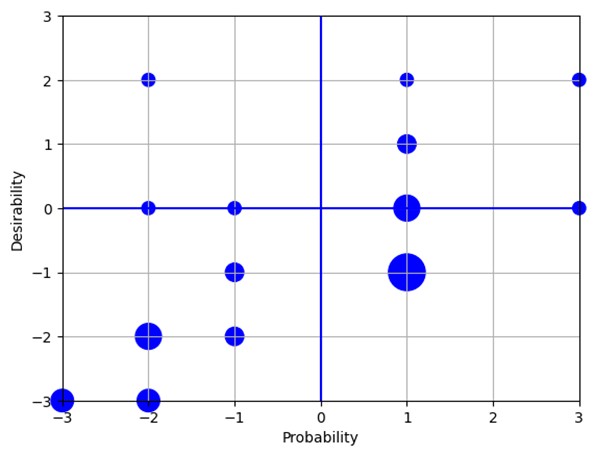
Figure 1. By 2035, over half of major Finnish companies will have AI as a voting member on the board and/or executive team (n=34).
Sixteen panelists (out of 34) considered the first statement, “By 2035, over half of major Finnish companies will have AI as a voting member on the board and/or executive team”, both improbable and undesirable. They emphasized that legal accountability and ethical oversight necessitate human control over voting rights in executive bodies. Several questioned who would bear legal responsibility for an AI-generated vote under the current regulatory framework and did not foresee substantial legislative changes over the next decade. They also doubted AI’s ability to manage complex tasks autonomously, instead positioning AI as a tool that enhances human decision-making. As one panelist stated: “I believe that as a source of perspectives, a broad synthesizer of knowledge, and an analyzer of data, AI will play an important role, but I find it difficult to see it as a decision-maker.”
Conversely, the four panelists who regarded AI voting rights as both probable and desirable argued that AI’s rapid learning trajectory could enable meaningful participation in executive decision-making. They highlighted AI’s potential advantages relative to human actors and expressed an optimistic view of AI’s future capabilities, as one panelist noted:
“From an owner’s perspective, artificial intelligence could even be a more reliable board member or leader than a human. AI does not get tired, become alcoholic, or become distracted by personal life crises, conflicts of interest, or other human concerns. It makes decisions based on goals, principles, and facts. The owner’s remaining responsibility is to ensure that the AI has been trained properly.”
The capabilities and juridical responsibility of AI were also central concerns for the thirteen panelists, who regarded the prospect of AI obtaining voting rights as probable but not desirable. This group expressed strong reservations about AI’s ability to make unbiased judgments, particularly given the persistence of algorithmic bias and the opacity of machine‑learning systems. They emphasized that the lack of transparency in AI’s autonomous reasoning processes poses substantial barriers to assigning legal accountability in decision-making contexts. These panelists predominantly envisioned AI as a supportive tool that augments, rather than replaces, human judgment in strategic decision-making. Several articulated the view that AI’s value lies in its analytical and advisory functions.
The next future statement related to strategic management in the first round was “By 2035, at least 50% of strategic-level decisions in Finnish companies will be made without direct human involvement”. As Figure 2 shows, the panelists’ views were also very divergent regarding this statement. The median values were 0.5 for probability (SD 1.6) and -0.5 for desirability (SD 1.67).
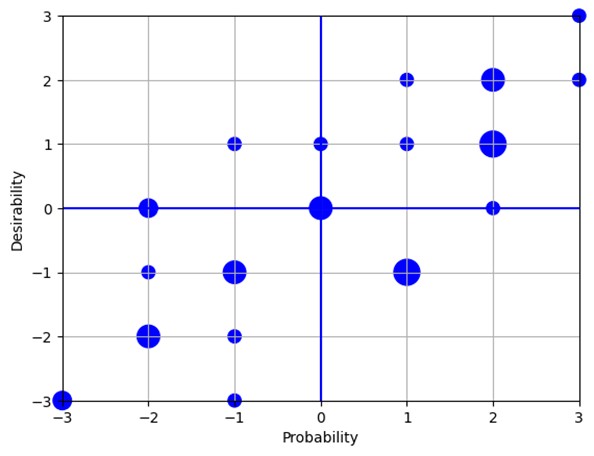
Figure 2. By 2035, at least 50% of strategic-level decisions in Finnish companies will be made without direct human involvement.
Following this, the panelists were asked to evaluate the statement “in 2035, in more than half of Finnish companies, the CEO will have a digital twin that substitutes for the CEO while they sleep”. The panelists expressed considerable dissensus on this statement as well (Figure 3). The median probability rating was 0.5 (SD = 1.6), and the median desirability rating was –0.5 (SD = 1.67).
The panelists’ responses that fell into the three other quadrants of the probability-desirability matrix emphasized the supportive role of AI and the importance of human oversight in strategic decision-making, for example:
…strategic decision-making involves many human and contextual factors: values, intuition, leadership culture, and interpersonal dynamics. These are difficult to model.
There’s always a need for a human to integrate AI’s output with the operational context and established history. It’s beneficial if AI can facilitate understanding of complex data before decisions are made, but responsibility should remain with a human decision-maker.
Independent AI decision-making was also challenged from a legal standpoint. Several panelists emphasized that AI currently lacks any juridical status comparable to that of a natural person or a legal entity and therefore cannot hold the rights and obligations required for independent strategic decision-making. Without such a legal foundation, AI cannot be held accountable for its actions, nor can responsibility be assigned in a manner consistent with existing legislation. As one panelist succinctly stated: “It is wishful thinking to imagine that AI would make independent strategic decisions.”
Following this, the panelists were asked to evaluate the statement “in 2035, in more than half of Finnish companies, the CEO will have a digital twin that substitutes for the CEO while they sleep”. The panelists expressed considerable dissensus on this statement as well (Figure 3). The median probability rating was 0.5 (SD = 1.6), and the median desirability rating was –0.5 (SD = 1.67).
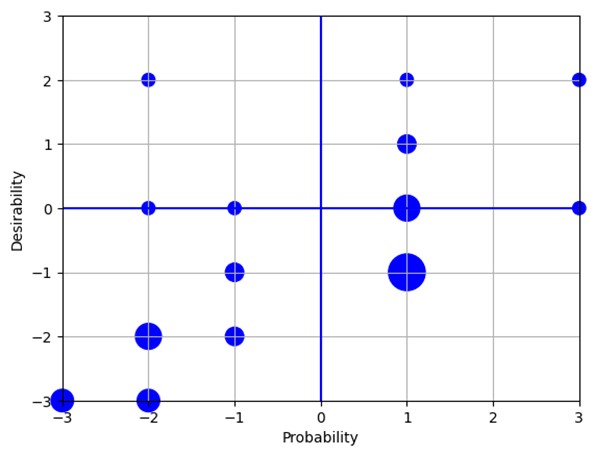
Figure 3. In 2035, in more than half of Finnish companies, the CEO will have a digital twin that substitutes for the CEO while they sleep (n=34).
The panelists who considered the idea of CEOs’ digital twins both probable and desirable (n=4) anticipated that technological development could make such an arrangement feasible by 2035, while emphasizing that any substitution by the digital twin would need to occur within certain well-defined or routine tasks and established boundaries.
By contrast, the panelists who viewed the statement as both improbable and undesirable (n= 16) were sceptical about the ability of a digital twin to meaningfully substitute for a CEO. Some questioned whether a CEO would be willing or able to catch up on the work completed by the twin during their absence. Panelists whose scores were placed in the other quadrants of the matrix highlighted the fundamental differences between an algorithm and a human leader, particularly in relation to the multifaceted and relational nature of executive work, noting, for example:
… the CEO’s job is first and foremost about human presence, interpersonal interaction, listening, intuition, inspiring, motivating, convincing, and communicating through body language. AI cannot substitute for a human in this.
The fourth and final future statement in the first round of the Delphi panel was “by 2035 in Finland, employee privacy, data protection, and labor rights in relation to algorithmic management will remain as strict as at present.” Figure 4 presents the panelists’ assessments of the statement. Although the panelists’ evaluations varied, the ratings for both probability (median = 1, SD = 1.33) and desirability (median = 2, SD = 1.39) were higher than those for the previous statements (Figures 1–3).
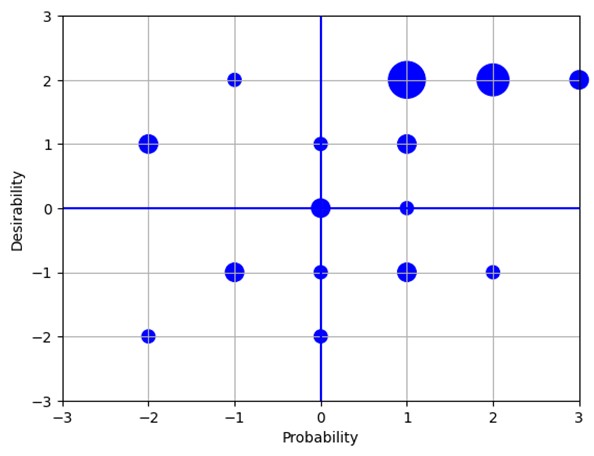
Figure 4. By 2035 in Finland, employee privacy, data protection, and labour rights in relation to algorithmic management will remain as strict as at present (n=33).
The majority of panelists (n = 18) who regarded the future statement as both probable and desirable supported maintaining strict regulation and hoped that it would become even stronger in the future. For example:
Most definitely—one would hope so, since in the end, they aren’t really strict even now. Clarity and quality in regulation should always be improved, but ultimately, it’s about shared ground rules that ensure fairness.
Here, regulation definitely has an important role in protecting us from ourselves. The boundaries between work and free time are becoming increasingly blurred, so there is demand—and a need—when it comes to assessing and overseeing the moral codes of companies and states.
There may, however, be companies that attempt to circumvent the rules, as one panelist noted:
I believe that regulation and restrictions will be just as tight or tighter in the future. Simultaneously, finding ways around them will become both an art and a competitive race.
Those panelists who argued against strong European AI regulation were concerned about losing position in the global competition and as a bottleneck for growth.
Finland needs growth, which is evident even in the political sphere. Privacy, data protection, and employment law may become obstacles to productivity growth as AI creates additional possibilities.
Right now in Europe, the focus is on restrictions. I don’t think this approach is good. What we need now is completely new thinking and the solutions that emerge from it.
4.2 Workshops in the second Delphi round
After the first online round, the second round took place three weeks after the closure of the initial survey and was organized as a set of three parallel workshops. Two of the workshops were conducted in person, while one workshop was conducted remotely. Workshops lasted for 2-4 hours. Discussions in these workshops were recorded, and their contents were transcribed. During the workshop sessions, participants were presented with the aggregated first‑round scores and engaged in discussions about the results. They also completed a series of individual and group exercises designed to explore potential futures of algorithmic management.
The major themes emerging from the qualitative analysis of the second Delphi round data related to strategic management that emerged in the general discussions were regulation, the pace of change, and contextual specificity. Similar to the strong support for strict regulation expressed in the first round (see Figure 4), participants again raised critical remarks concerning the legal feasibility of granting AI independent voting or decision‑making rights. This concern was articulated, for example, through statements such as:
In Finland, as in the rest of Europe, there are only two types of legal persons: natural persons, that is, human beings, and legal entities, such as companies and associations. Granting AI independent decision-making authority would, in practice, require the creation of a third type of entity. … is difficult to imagine this happening any time soon, because there are so many fundamental issues that would need to be resolved first.
If, as a member of the executive team, I were to lose a vote by four or five human votes to one cast by an AI, and things then went wrong, the humans would still be the ones held responsible.
The workshop participants also expressed some scepticism about whether the timeframe up to 2035 would be sufficient for the level of progress described in the first‑round future statements. As one panelist remarked when reflecting on the results, “Technology may evolve fast, but I believe that people don’t change at the same pace.” In addition, several participants criticized the first‑round statements for being overly general. They pointed out that the average size of Finnish companies is very small and that, in particular, one‑person enterprises tend to adopt new technology more slowly, which complicates broad generalizations about nationwide developments.
The workshop participants were also given the task of distinguishing between strategic management tasks that AI could perform independently and those for which AI would play a supportive role. Table 3 presents the tasks that were considered suitable for fully autonomous AI execution. The panelists, however, disagreed on whether AI’s role in budgeting and scenario building would be independent or augmentative, reflecting differing views on the extent to which these activities require human judgment.
Table 3. Strategic management tasks which will be performed independently by AI in 2035, according to our Delphi.
| The algorithm performs independently |
|---|
| • Action planning |
| • Alternatives analysis |
| • Benchmarking/competitor monitoring |
| • Board meeting briefing materials |
| • Budget monitoring (reporting) |
| • Budgeting |
| • Environmental scanning and exploration |
| • Identification of operating environment changes |
| • Lean improvement and optimization of operations |
| • Monitoring and steering strategy |
| • Monitoring specific metrics |
| • Process definition |
| • Report analysis and action recommendations |
| • Scenario planning |
| • Signalling and scouting the operating environment |
| • Visualization of results |
4.3 Statements and answers in the third Delphi round
The third and final round was conducted on the same eDelphi platform as round one, approximately three weeks after the workshops. In this Delphi round, the panelists were again asked to assess the probability and desirability or significance of a set of future statements that had been inductively formed and refined based on insights from the earlier stages of the Delphi process. For example, one of the workshop group exercises involved envisioning scenarios in which AI agents significantly reduced the number of employees in organizations. This discussion informed the formulation of a future statement asking panelists to evaluate whether AI agents are likely to replace human employees in future organizational settings.
In contrast to the first round, panelists in the third round were able to view the scores given by others while submitting their own assessments. They also provided written justifications that were visible to all participants in a similar fashion to the first round.
The first future statement of the third round Delphi survey was “Asia will dominate international trade in 2035 because European legislation limits the use of AI in strategic decision-making”. For this statement, the panelists were asked to give a score on probability and significance. The median value for probability for this statement was 1.4 (SD 1.25) and for significance 1.01 (SD 0.94).
As illustrated in Figure 5, the majority of the panelists (n = 18) considered this statement both probable and significant. In their responses, they noted that more permissive AI regulation is not the primary driver of Asia’s competitive advantage, but they acknowledged that strict EU regulation may slow down European trade. The panelists did not view this solely as a negative outcome; several emphasized that, in the long run, Europe may gain a competitive advantage by foregrounding humanistic and environmental values. They also pointed out that although Asia’s less restrictive AI legislation may offer competitive benefits in certain contexts, it also carries the risk of failure if insufficient safeguards lead to unintended consequences.
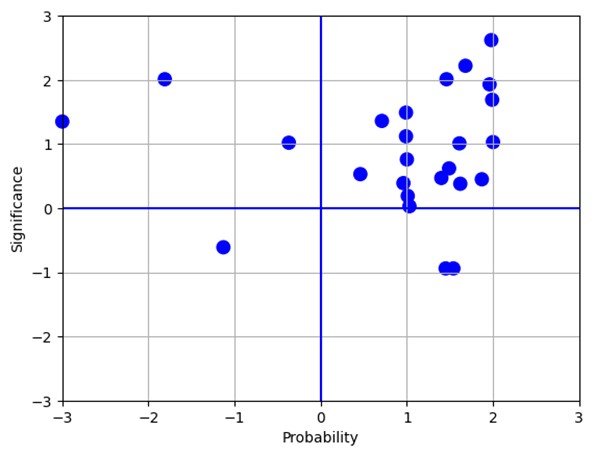
Figure 5. Asia will dominate international trade in 2035 because European legislation limits the use of AI in strategic decision-making (n=25).
The six panelists who did not find this future statement significant or probable discussed, for example, the different values of global trade and the difficulty of evaluating this statement because of that. For example, one participant stated:
It’s hard to forecast trends in other parts of the world where values and culture differ significantly from ours. Regulation is frequently seen as negative here, but it also helps prevent authoritarian rule and dictatorship.
The role of AI in strategic management was also examined by asking panelists to evaluate the future statement: “By 2035, artificial intelligence has reduced the need for strategy consultants to ten percent of the current level.” This statement was not considered particularly probable (median = –0.99, SD = 1.11) nor desirable (median = –0.25, SD = 0.96). As illustrated in Figure 6, only four panelists regarded the statement as both probable and desirable, reasoning that rapid technological development could enable AI to replace strategy consultants, especially those hired for short-term or project-specific assignments.
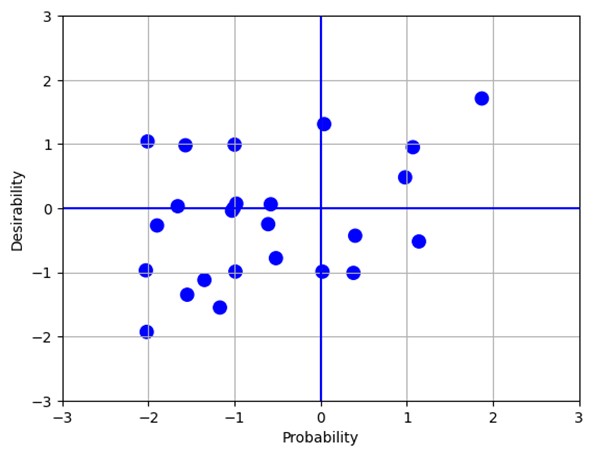
Figure 6. By 2035, artificial intelligence will have reduced the need for strategy consultants to ten percent of the current level.
Eleven panelists evaluated this statement to be both improbable and undesirable. The accompanying justifications emphasized the role of strategy consultants as facilitators of complex processes and argued that this is an inherently interpersonal and interpretive capability that the experts did not believe AI could meaningfully replicate. For example, several panelists highlighted that effective consulting involves guiding dialogue, sensing organizational dynamics, and fostering alignment, all of which they viewed as beyond the reach of AI systems.
People will still want other people as sparring partners, so the number of human consultants will not decrease that quickly or radically.
…I believe that strategy processes require many capabilities for which a human touch is still needed.
The comments by the panelists whose score did not fall into these contrasting categories highlighted the augmentative role of AI working as a support for strategic decision-making, together with human strategy consultants.
Finally, the expert panelists were also asked to give their scores and written justifications for a future statement about AI agents replacing employees. Figure 7 depicts panelists’ answers to the statement “By 2035, organizations will have been reduced to ten percent of their current size, as management mainly involves leading AI agents”. The statement was not seen as very probable nor desirable, as the median for probability was -1.87 (SD 1.46) and for desirability -1.43 (SD 1.01).
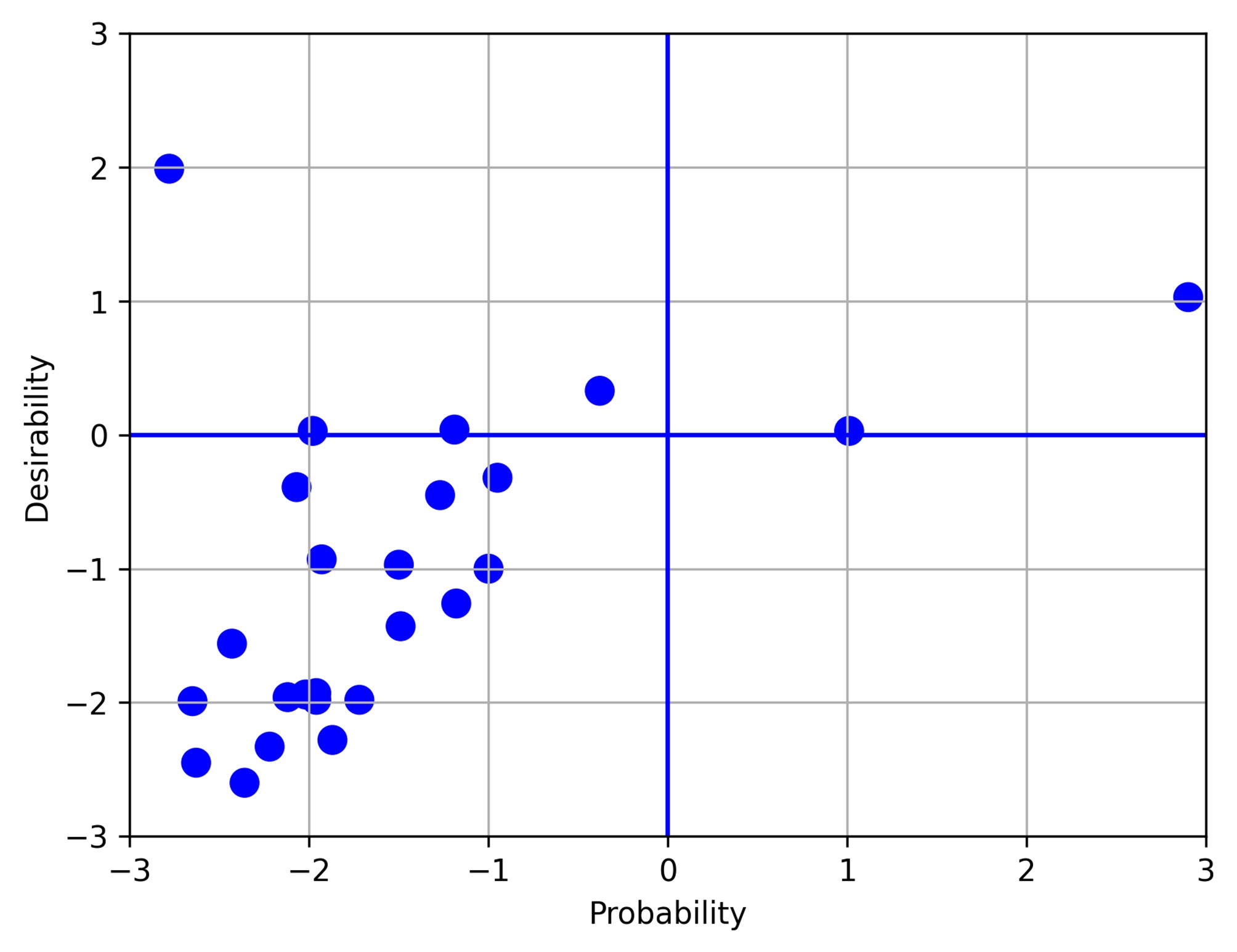
Figure 7. By 2035, organizations will have been reduced to ten percent of their current size, as management mainly involves leading AI agents.
The vast majority of respondents (n=19) regarded this statement as improbable and undesirable. In their written comments, they argued that the development of AI can be compared to steam machines, the mechanization of agriculture, computers, or smartphones, which, against all predictions, have not meant that the number of human workers would drop drastically. The panelists reminded us that it is we humans who make such organizational decisions, and therefore, there will always be a human element in organizations, not to be replaced by AI agents. Humans ultimately want other humans as companions.
Rather than a reason to diminish the human workforce when introducing AI agents, the panelists argued that AI agents will increase productivity, and when scaling this advantage, both humans and AI agents will be needed. Moreover, some of the panelists questioned the devastating societal outcomes of such development, for example: “People need to be kept in work so there will be customers, enabling capital to produce returns. I can’t quite grasp how a market economy operates without customers who have money to purchase goods and services. “
The panelists whose score did not fall into this improbable – undesirable quadrant were mainly sceptical of the timeline – ten years to the drastic drop of human workers seemed too fast for them.
4.4 Possible futures of algorithmic management in organizational leadership
Using the data gathered across the three Delphi rounds, we constructed a table of possible futures for algorithmic management in organizational leadership (Table 4). The “adverse development” column presents trajectories that the Delphi panelists generally deemed undesirable. The middle column, “deliberative development,” reflects a cautious and balanced pathway of adopting algorithmic management, which reflects a future that the majority of panelists considered both probable and desirable. In contrast, the “techno‑optimistic development” column outlines future progress that is considered feasible but not universally desirable among the panelists.
Table 4. Possible futures to algorithmic management in organizational leadership.
| Adverse development | Deliberative development | Techno-optimistic development | |
|---|---|---|---|
| Voting rights | AI makes wrong decisions because it cannot engage in human interaction or assess complex developments. Accountability becomes unclear. | AI sits in the executive team or board in a support role as an assistant, helping with management decision-making. | Executive and board roles change: an owner-trained AI makes decisions based on goals, principles, and facts. |
| Digital Twins | AI substitutes for the CEO, who loses a sense of control while trying to understand what the system has done. | Digital tools act as the CEO’s staff officers, supporting leadership work. | Digital twins replace top management in limited, well-defined tasks. |
| Autonomous AI Decisions | AI makes strategic decisions, but its logic fails; complex issues receive inconsistent answers, and responsibility becomes blurred. | AI helps interpret complex data before decisions, but accountable leaders still decide. | AI integrates multiple data sources creatively and predictively, closely supporting operational-level strategic decisions. |
| Strategy Consultants | AI-generated strategic advice does not create a competitive advantage. | AI can replace consultants in narrow tasks and junior roles, but facilitation of strategy processes still requires humans. | The number of strategy consultants drops sharply due to rapid advances in AI. |
| Regulation | Different AI regulations across continents significantly affect competitiveness and weaken European business. | Both strict and loose AI regulations create opportunities that can strengthen or weaken competitiveness. | European regulatory values become a distinctive competitive advantage. |
| AI Agents Instead of Employees | Everything that can be automated is automated. Market economies begin to fracture. | New or different kinds of work for humans always emerge, even though the number of AI will grow. | Agents create a scalable competitive advantage while companies also expand human workforces. |
5. Discussion
This study examined how algorithmic management may shape organizational leadership in expert organizations by 2035, addressing a gap in research that has largely focused on platform-based and routine work. Based on our three-round Delphi study with Finnish experts, findings suggest that algorithmic management is unlikely to lead to a uniform or deterministic transformation of top management, at least in the 10-year time horizon. Instead, expert perceptions cluster around three distinct but co-existing futures – adverse, deliberative, and techno-optimistic development – each implying different configurations of leadership, accountability, and decision authority.
Across all three pathways, panelists emphasized that strategic leadership remains a contested domain when algorithmic systems are introduced. This extends existing literature on algorithmic management, which has primarily examined operational control mechanisms such as monitoring, evaluation, and sanctioning (Kellogg et al. 2020; Wiener et al. 2021). In contrast, the present findings show that algorithmic management in the context of organizational leadership raises new questions about strategic judgment, responsibility, and legitimacy at the top-management level. Key discussion points are the pace of change and the degree to which top management tasks can and should be delegated to algorithmic management systems.
The adverse future reflects general concerns about delegating strategic authority to AI systems. Panelists highlighting this future stressed that algorithms lack the capacity to engage with ambiguity, understand social dynamics, and balance the ethical trade-offs that characterize strategic decision-making in expert contexts. These concerns align with prior critiques of algorithmic control emphasizing opacity and unclear accountability (Rosenblat & Stark 2016; Lippert 2023). Notably, resistance in this adverse future is not framed as opposition to digitalization as such, but as skepticism towards algorithmic management systems replacing human judgment in areas where professional responsibility and contextual interpretation are central.
The deliberative development future represents a more moderate and widely shared view among our panelists. Here, algorithmic systems are expected to play an increasingly significant role in areas such as data analysis, forecasting, and scenario-building, while formal decision authority should remain with human leaders. This view is consistent with recent leadership research suggesting that executives increasingly act as interpreters and overseers of algorithmic outputs rather than direct decision-makers (Stark & Broeck 2024). In expert organizations, algorithmic management is thus framed as an augmentative decision support rather than autonomous control, with clear boundaries maintained between analytical input and accountable judgment.
Contrasting these, the techno-optimistic future points to more extensive changes in leadership structures and organizational size. In this scenario, AI agents and digital twins take over defined strategic and managerial tasks, reducing the need for certain roles, including junior consultants and middle managers. Interestingly, even within this future, panelists did not anticipate the complete disappearance of leadership. Instead, leadership work was envisioned to shift toward defining objectives, constraints, and governance principles for algorithmic systems. This supports emerging arguments that algorithmic management redistributes decision-making rather than eliminates managerial authority altogether (Keegan & Meijerink 2025).
Regulation emerged as a cross-cutting factor shaping all pathways. As the Delphi study was situated in the context of Finland, panelists expressed divergent views on the implications of European AI regulation, reflecting broader debates on competitiveness versus protection. While some anticipated that strict regulation could disadvantage European firms relative to less regulated regions, others viewed regulatory standards around transparency, data protection, and labor rights as potential sources of legitimacy and long-term advantage within the global competitive landscape. In expert organizations, where trust and professional autonomy are critical, regulatory alignment around clearer rules and boundaries may therefore influence how algorithmic management is adopted and governed.
Overall, the findings highlight a human-centred view, arguing against technological determinism and suggesting that algorithmic management in expert organizations will continue to develop through negotiated and context-dependent processes rather than technological inevitability. Compared to platform-based settings, expert work appears to impose stronger limits on the extent to which strategic authority can and should be delegated to algorithms. At the same time, the growing acceptance of particularly generative AI as a strategic support actor indicates that top management roles will continue to evolve. For research on algorithmic management, this highlights the importance of treating expert work as a distinct context and of examining leadership not only as a target of algorithmic control, but as an active site where the boundaries of algorithmic authority are defined. This perspective extends prevailing theoretical conceptualizations, which often portray the automation-augmentation tension as a binary and insufficiently capture the hybridity of human-AI management configurations, perhaps exacerbated by the nature of expert work, e.g., different variations of hybrid working (Raisch & Krakowski 2021).
This study contributes to algorithmic management and expert work research by developing a future-oriented account of how algorithmic systems may enter knowledge-intensive and professional contexts without straightforwardly replacing expertise. Existing algorithmic management research has often focused on the measurement, control, and evaluation of work through algorithmic systems, including recent efforts to develop more precise constructs and instruments for studying algorithmic management in organizations (Parent-Rocheleau et al. 2024). Our findings extend this literature by shifting attention from worker control toward strategic and expert organizational leadership, where the central tensions concern accountability, legal personhood, regulation, professional judgment, and the limits of autonomous decision-making. The panel’s resistance to AI voting rights, CEO substitution, and drastic reductions in human strategy consultants also qualify strong automation narratives: in expert organizations, AI was seen as capable of taking over bounded analytical and preparatory tasks, but not so much the interpretive, facilitative, and jurisdictional dimensions of expert work. This aligns with research showing that knowledge work is increasingly shaped by the interlacing of situated and algorithmic modes of knowing rather than by simple replacement (Kim et al. 2025), and with theories of professional service and knowledge-intensive firms that emphasize expertise, client interaction, and judgment as core organizational resources (von Nordenflycht 2010). The findings further show that resistance to algorithmic authority is not reducible to irrational algorithm aversion: although the panelists’ concerns resemble the reluctance to rely on algorithms after observing errors identified by Dietvorst et al. (2015), their justifications were grounded in legal accountability, opacity, bias, regulation, and the social nature of strategic work. Thus, the study contributes a differentiated account of algorithmic management in expert organizations: AI is expected to become deeply embedded in leadership infrastructure, but its legitimacy depends on deliberative governance, human accountability, and the preservation of expert judgment.
Besides this, the present work contributes to current knowledge by specifying what algorithmic management is likely to change – and what it is unlikely to replace – in organizational leadership of expert organizations in the context of Finland. Whereas recent work on digital and algorithmic leadership has emphasized the possibility that AI may “take over” or substantially transform leadership functions (Quaquebeke & Gerpott 2023) and has begun to conceptualize algorithmic leadership as a distinct leadership form (Chang et al., 2025), our findings suggest a more bounded and relational interpretation, whereby our Delphi panel did not primarily envision AI as an autonomous leader, board member, CEO substitute, or independent strategic decision-maker. Instead, the most plausible and desirable future was one in which AI supports organizational leadership by producing analyses, monitoring environments, preparing briefings, identifying alternatives, visualizing results, and strengthening strategic sensemaking while accountable human leaders retain final authority.
This extends architectural leadership theory, which frames leadership as the design of value-enhancing organizational infrastructure rather than only interpersonal influence (Kollenscher et al. 2009, 2017), and resonates with recent arguments that leadership increasingly involves structuring organizational and HRM processes rather than merely “leading people” directly (Binyamin & Kollenscher 2025). At the same time, the panel’s emphasis on judgment, presence, accountability, facilitation, intuition, and relational interpretation reinforces classic critiques of overly abstracted managerial models: leadership and management remain situated, mundane, socially negotiated practices rather than fully codifiable decision routines (Alvesson & Sveningsson 2003; Mintzberg 2004). In this sense, the study contributes to the broader leadership literature by showing that algorithmic management does not simply automate leadership; it redistributes leadership work across human judgment, organizational infrastructure, and algorithmic support systems, thereby answering calls for leadership theory to better account for changing technological and organizational contexts (Dinh et al. 2014).
6. Conclusion, limitations, and future research directions
This study examined the future of algorithmic management in the leadership of expert organizations through a Delphi study of Finnish experts. The findings indicate that algorithmic management is unlikely to fully replace humans in organizational leadership by 2035. Instead, its development is expected to follow multiple, coexisting future development paths that range from cautious use of algorithmic management systems as decision support to more transformative reconfigurations of leadership roles. Across these futures, accountability, judgment, pace of change, and regulatory context remain central concerns, particularly in expert work characterized by professional autonomy and complex decision-making. Our study contributes to algorithmic management research by extending analysis to expert organizations and by showing that leadership plays an active role in shaping how, and to what extent, algorithmic authority can and should be institutionalized.
Despite conducting a three-round Delphi study with multiple rounds of deliberation, this study has limitations that should be acknowledged. First and foremost, the findings are grounded in a Northern European context, particularly the top management of experts in Finland. While the themes presented here might apply to other sociocultural and business contexts, the broader generalizability of our findings is not feasible, as is only natural for qualitative research. Overall, we call for more studies focused on building a better understanding of a Nordic model for algorithmic management.
By choice of research design, our study focused on organizational leadership. In hindsight, this seems to have brought an additional layer to the already difficult task of understanding the future, whereby the general difficulty of envisioning futures related to top-management level tasks – which are often highly relational, social, and dynamic – was definitely seen here. There seems to be a strong view of how such tasks should stay human, even if technological advances would permit otherwise. Perhaps if the focus had been on more downstream management tasks, participants would have envisioned a more radical future vision for 2035. Further, our study was situated in the context of expert work, and by nature, the management of expert work leans more towards measuring some expert ‘output’ – e.g., academic papers, reports, analyses, grant applications, patents, consultancy, software artifacts, etc. – rather than processes through which said output is achieved. This has inherent implications on how algorithmic management is understood and applied, whereby studying the impacts of algorithmic management in, e.g., blue-collar work environments could be an important avenue for future research.
In terms of our method, the way in which we have framed our statements, as well as allowed participants to give their input, may have influenced the results. For instance, in round 3, participants saw others’ responses to the preferable/probable question, but not in round 1. Future research could play with the research design and perhaps shift the order (round 1 ratings visible to participants, round 3 masked) to see if it has an impact on reaching consensus. In a similar vein, it needs to also be noted that we experienced some participation churn throughout the three stages of our Delphi study, whereby we started with 34 participants and ended with 25. Even though this is typical for studies of this type, future research could attempt to find creative ways to improve retention and thus potentially improve the deliberation.
Acknowledgements
The work presented here has received co-funding from the Finnish Work Environment Fund, project: Kone johtajana – tekoäly asiantuntija- ja tietotyön johtamisessa (RoboBoss), project code: 240493. The authors would also like to thank Anna Lahtinen, Janne Kauttonen, and Martti Asikainen for their help in preparing the manuscript.
References
Alon, I., Haidar, H., Haidar, A., & Guimon, J. (2025). The future of artificial intelligence: Insights from recent Delphi studies. Futures, 165, 103514.
Alvesson, M., & Sveningsson, S. (2003). Managers doing leadership: The extra-ordinarization of the mundane. Human relations, 56(12), 1435-1459.
Bevilacqua, S., Masárová, J., Perotti, F. A., & Ferraris, A. (2025). Enhancing top managers’ leadership with artificial intelligence: Insights from a systematic literature review. Review of Managerial Science, 19(9), 2899–2935.
Binyamin, G., & Kollenscher, E. (2025). Linking architectural leadership theory to structuring HRM processes: from leading people to leading organizational processes. Journal of Organization Design, 14(3), 209-225.
Chang, Q., Zhang, J., & Xiao, X. (2025). Leading Like Human: Clarifying the Connotation and Validating the Structure of Algorithmic Leadership. International Journal of Human–Computer Interaction, 1-28.
Cuhls, K. E. (2024). Argumentative Delphi surveys: Lessons for sociological research. The American Sociologist, 55(2), 120–141.
Dietvorst, B. J., Simmons, J. P., & Massey, C. (2015). Algorithm aversion: People erroneously avoid algorithms after seeing them err. Journal of Experimental Psychology: General, 144(1), 114–126.
Dinh, J. E., Lord, R. G., Gardner, W. L., Meuser, J. D., Liden, R. C., & Hu, J. (2014). Leadership theory and research in the new millennium: Current theoretical trends and changing perspectives. The leadership quarterly, 25(1), 36-62.
Edwards, R. (1979). Contested terrain: The transformation of the workplace in the twentieth century. New York: Basic Books.
Eerola, A., & Miles, I. (2011). Methods and tools contributing to FTA: A knowledge-based perspective. Futures, 43(3), 265–278.
Eurofound. (2026). AI, algorithmic management and the transformation of society, work and employment – exploring the concepts. Eurofound research paper. Publications Office of the European Union, Luxembourg.
Haefner, N., Wincent, J., Parida, V., & Gassmann, O. (2021). Artificial intelligence and innovation management: A review, framework, and research agenda. Technological Forecasting and Social Change, 162, 120392.
Jianu, B., Ashton, M., & Lugosi, P. (2025). Integrating algorithmic management in hotels: Emerging challenges and opportunities for frontline managers. International Journal of Hospitality Management, 129, 104168.
Keegan, A., & Meijerink, J. (2025). Algorithmic management in organizations? From edge case to center stage. Annual Review of Organizational Psychology and Organizational Behavior, 12, 395–422.
Kellogg, K. C., Valentine, M. A., & Christin, A. (2020). Algorithms at work: The new contested terrain of control. Academy of Management Annals, 14(1), 366–410.
Kim, B., Mehrizi, M., Bailey, D. (2025). Interlacing situated and algorithmic modes of knowledge work: A workplace jurisdiction perspective. Academy of Management Journal 68(5), 907-938.
Kollenscher, E., Eden, D., Ronen, B., & Farjoun, M. (2017). Architectural leadership: The neglected core of organizational leadership. European Management Review, 14(3), 247-264.
Kollenscher, E., Ronen, B., & Farjoun, M. (2009). Architectural leadership: Building a value enhancing infrastructure. Human Systems Management, 28(1-2), 35-45.
Kotter, J. P. (1990). A force for change: How leadership differs from management. New York: Free Press.
Lippert, I., Kirchner, K., & Wiener, M. (2023). Context matters: The use of algorithmic management mechanisms in platform, hybrid, and traditional work contexts. Proceedings of the 56th Hawaii International Conference on System Sciences, 5282–5291.
Linturi, H. (2020). Delfoin monet tarkoitukset. Retrieved from https://metodix.fi/2020/03/08/delfoin-tarkoitukset
Linturi, H., & Kauppi, A. (2021). Miten tutkimme tulevaisuuksia Delfoi-menetelmällä? In M. Kylmäkoski & P. Rainò (Eds.), Delfoilla tulevaisuuteen (pp. 13–44). Helsinki: Humanistinen ammattikorkeakoulu.
Linturi, H., & Kuusi, O. (2022). Tulevaisuuksia ennakoiva Delfoi-menetelmä. In H.-K. Aalto, K. Heikkilä, P. Keski-Pukkila, M. Mäki, & M. Pöllänen (Eds.), Tulevaisuudentutkimus tutuksi – Perusteita ja menetelmiä. Turun yliopisto.
Mintzberg, H. (2004). Managers not MBAs: A hard look at the soft practice of managing and management development. Berrett-Koehler.
Möhlmann, M., Zalmanson, L., Henfridsson, O., & Gregory, R. W. (2021). Algorithmic management of work on online labor platforms: When matching meets control. MIS Quarterly, 45(4), 1999–2022.
Parent‐Rocheleau, X., Parker, S. K., Bujold, A., & Gaudet, M. C. (2024). Creation of the algorithmic management questionnaire: A six‐phase scale development process. Human Resource Management, 63(1), 25-44.
Pinski, M., Hofmann, T., & Benlian, A. (2024). AI literacy for the top management: An upper echelons perspective on corporate AI orientation and implementation ability. Electronic Markets, 34, Article 24.
Quaquebeke, N. V., & Gerpott, F. H. (2023). The now, new, and next of digital leadership: How Artificial Intelligence (AI) will take over and change leadership as we know it. Journal of Leadership & Organizational Studies, 30(3), 265-275.
Raisch, S., & Krakowski, S. (2021). Artificial intelligence and management: The automation–augmentation paradox. Academy of Management Review, 46(1), 192–210.
Ropo, A., & Parviainen, J. (2001). Leadership and bodily knowledge in expert organizations: epistemological rethinking. Scandinavian Journal of Management, 17(1), 1-18.
Rosenblat, A., & Stark, L. (2015). Uber’s drivers: Information asymmetries and control in dynamic work. SSRN Electronic Journal.
Stark, D., & Vanden Broeck, P. (2024). Principles of algorithmic management. Organization Theory, 5(2), 1–24.
Tarafdar, M., Page, X., & Marabelli, M. (2023). Algorithms as co‑workers: Human–algorithm role interactions in algorithmic work. Information Systems Journal, 33(2), 232–267.
Tuomi, A., Jianu, B., Hua, M., Roelofsen, M., & Ascenção, M. P. (2024). Strategies for communicating and mitigating algorithmic control on delivery platforms. Convergence, 30(5), 1685–1709.
Vallas, S., & Schor, J. B. (2020). What do platforms do? Understanding the gig economy. Annual Review of Sociology, 46, 273–294.
von Nordenflycht, A. (2010). What is a professional service firm? Toward a theory and taxonomy of knowledge-intensive firms. Academy of Management Review, 35(1), 155–174.
Wiener, M., Cram, W., & Benlian, A. (2021). Algorithmic control and gig workers: A legitimacy perspective of Uber drivers. European Journal of Information Systems, 32(3), 485–507.
Wood, A. J., Graham, M., Lehdonvirta, V., & Hjorth, I. (2019). Good Gig, Bad Gig: Autonomy and Algorithmic Control in the Global Gig Economy. Work, Employment and Society, 33(1), 56-75.
Work, N. T., Morales, K., & Stecher, A. (2022). Platform capitalism and neo-normative control: “Autonomy” as a digital platform control strategy in neoliberal Chile. New Technology, Work and Employment, 38(2), 230–251.
Yukl, G. (2013). Leadership in organizations (9th ed.). Pearson.